Yang Mushi
Crisscross
March 14, 2026 – May 3, 2026
Galerie Urs Meile Beijing
Opening:
Saturday, March 14, 2026, 4pm
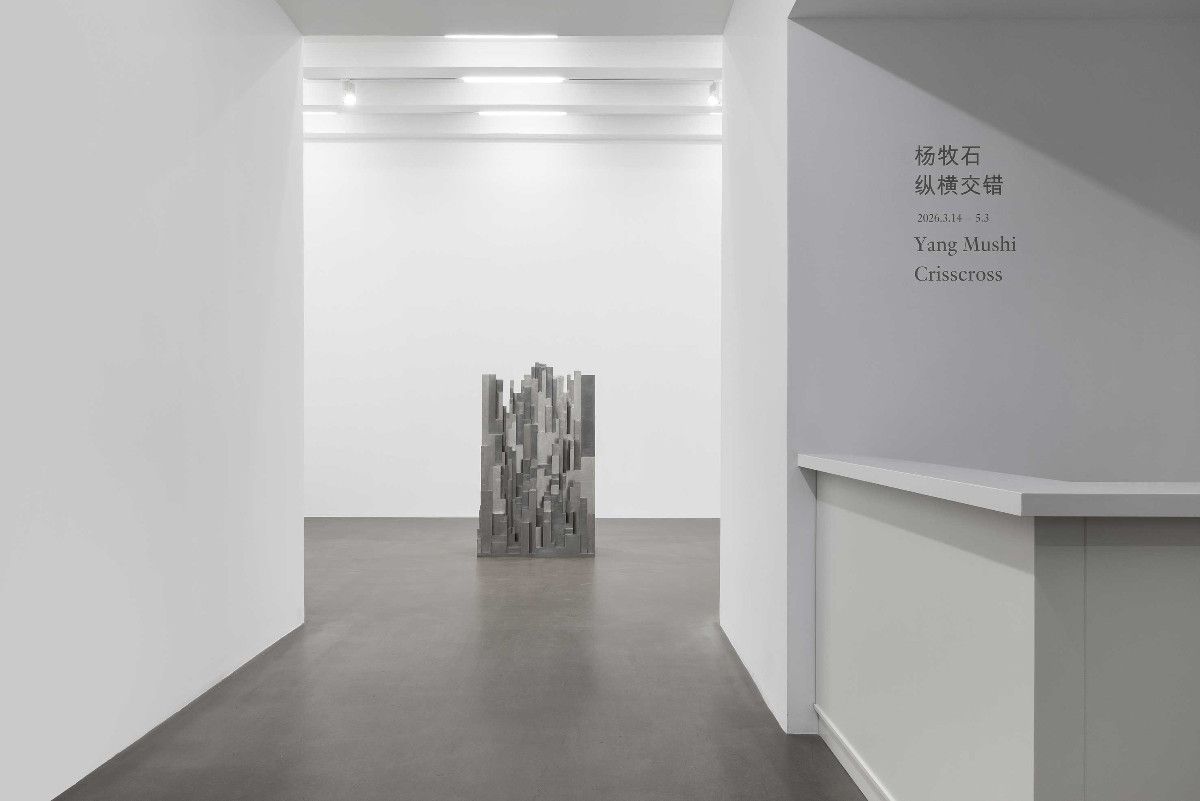
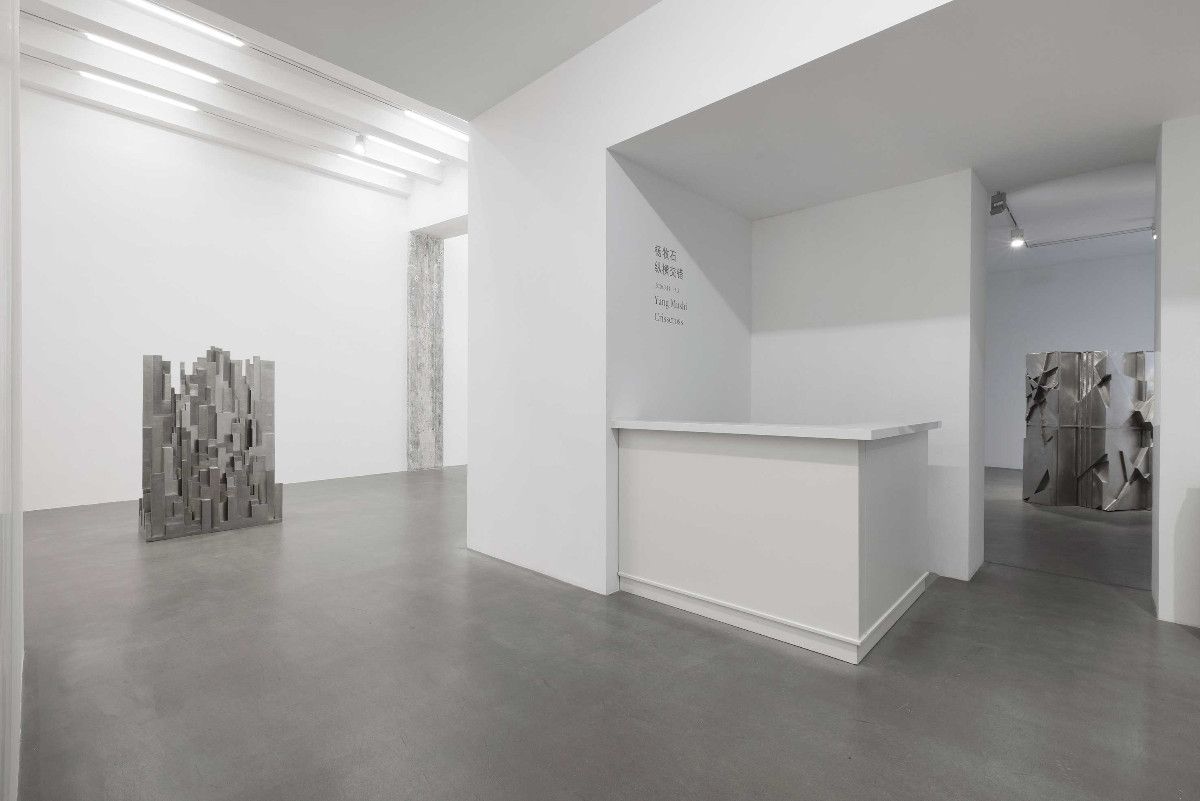
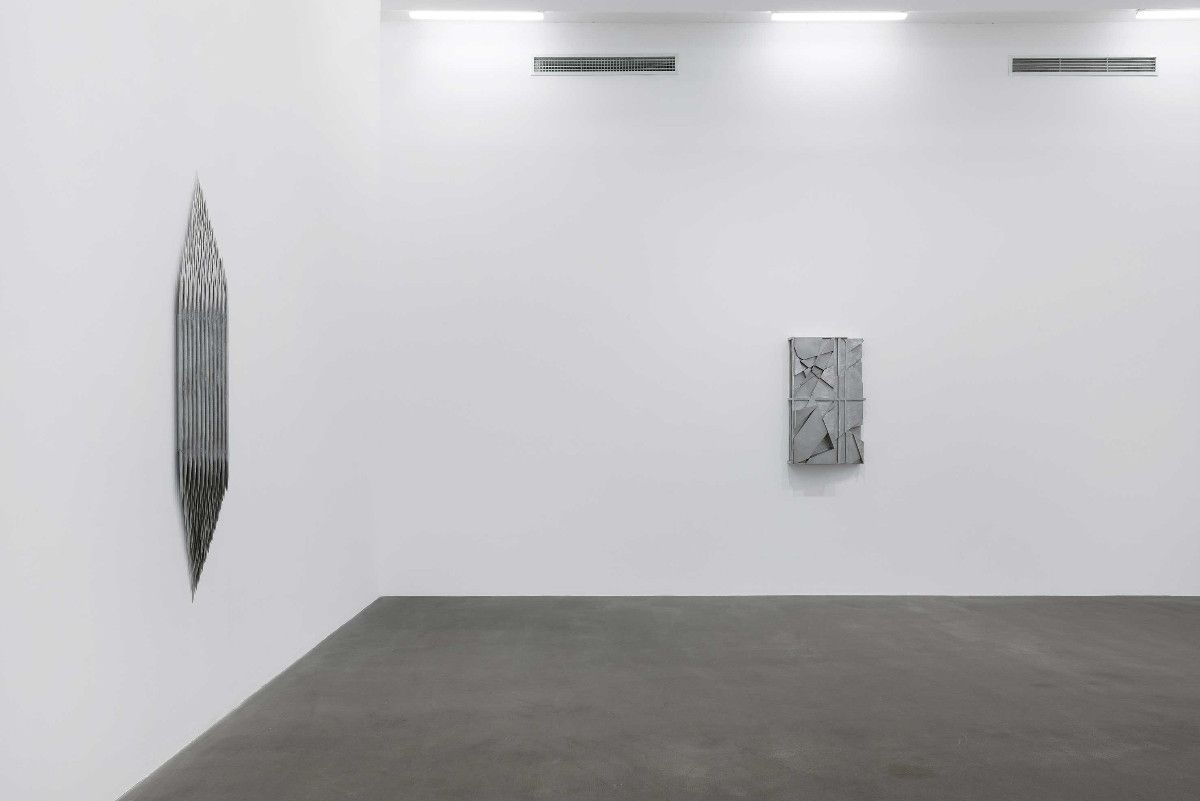
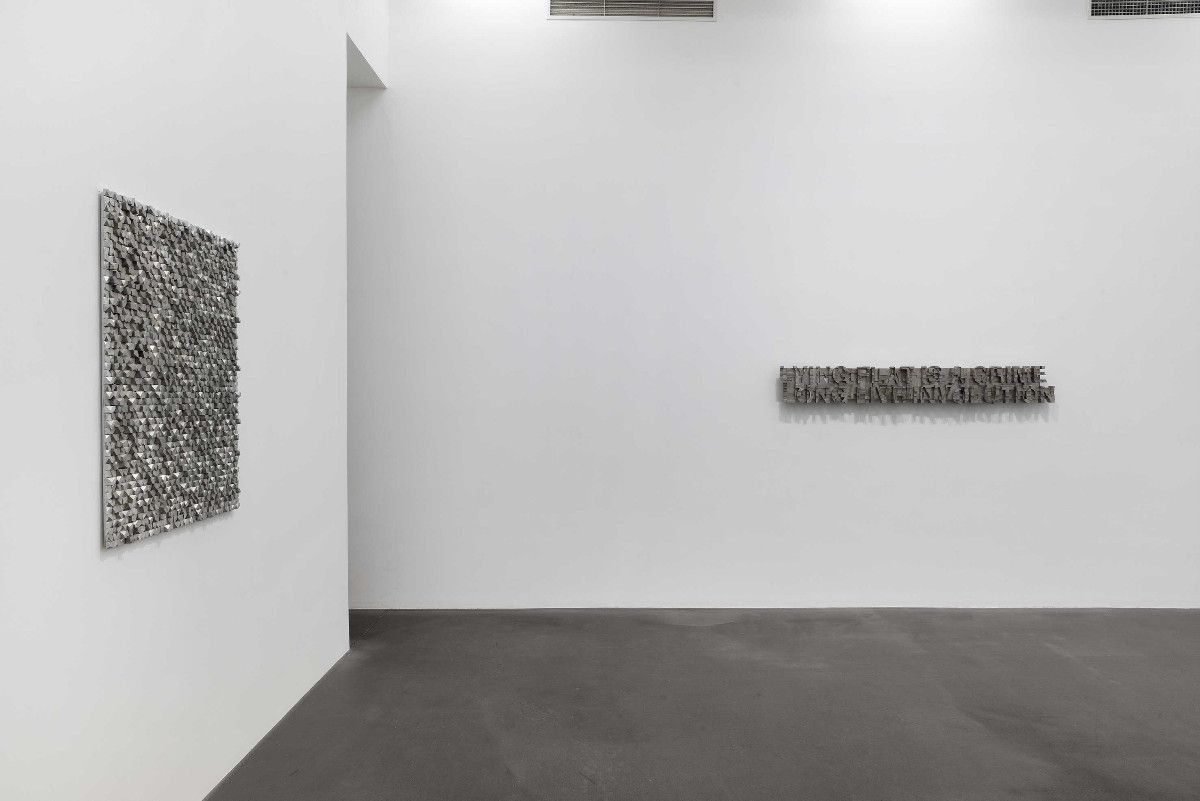
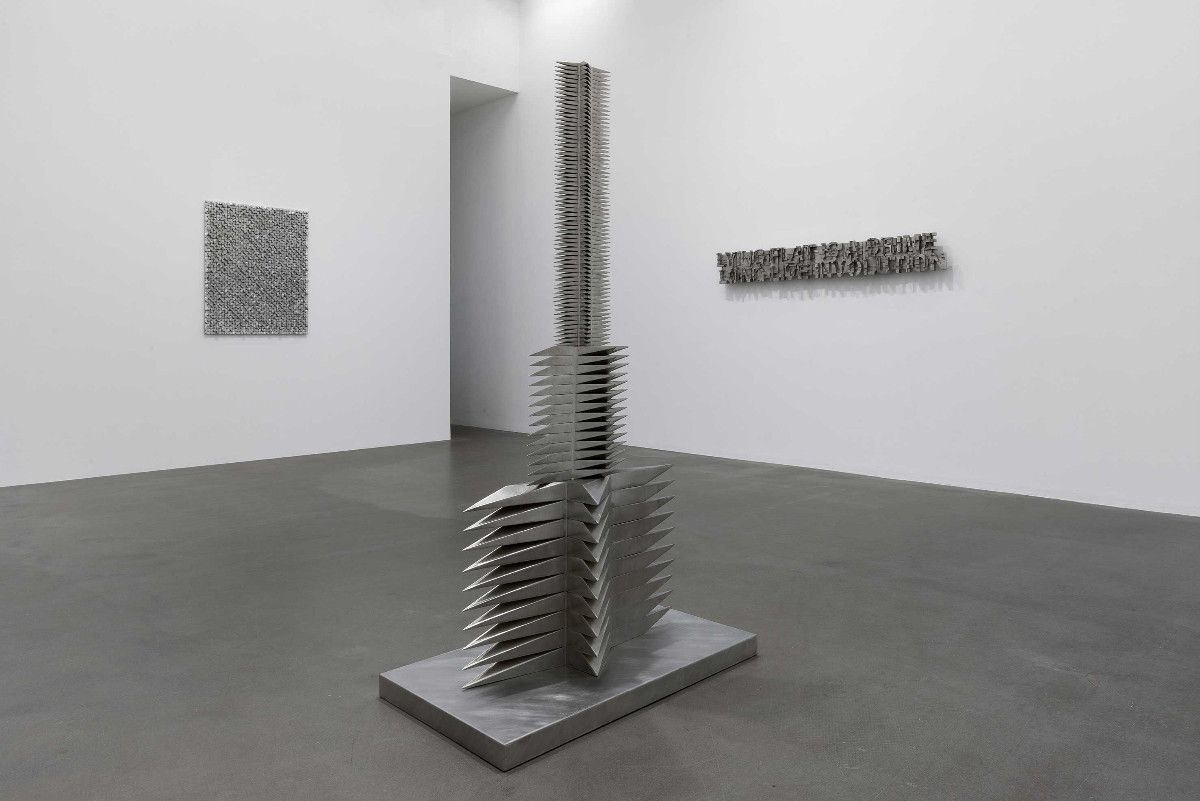
Galerie Urs Meile is pleased to announce Crisscross, a solo exhibition by Yang Mushi (b. 1989). In the exhibition, Yang partitions the white-cube gallery space through rigorously welded structures, sharply articulated geometric forms, and nuanced fragments arranged within a highly systematized order. The exhibition title refers to the artist’s distinctive working methodology, in which separate metal components are interlaced and consolidated into unified sculptural entities. Multiple fragments are structurally integrated and intentionally mispositioned within a regulated system that introduces subtle contradictions, reflecting the tension individuals experience when navigating society’s prudent yet restrictive external frameworks.
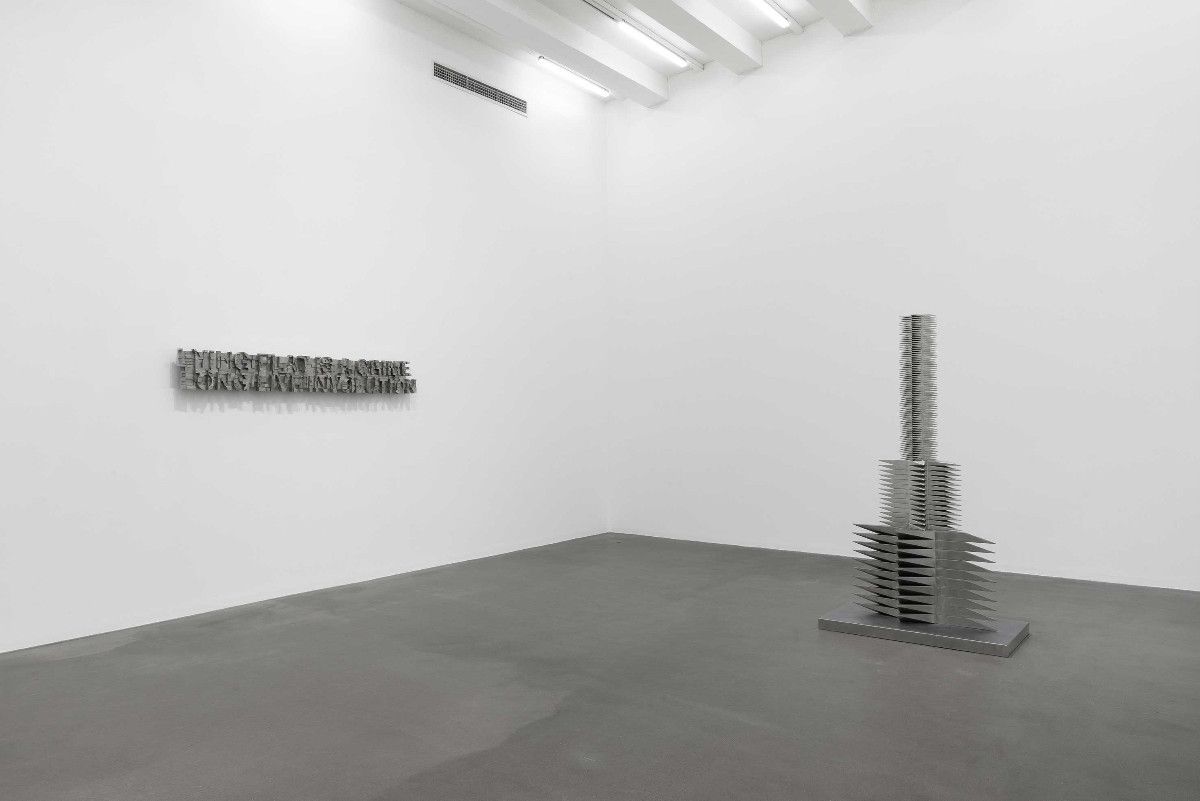
Materialization – Lying Flat Is a Crime, Rat Race Forever (2025, recycled stainless steel, 25 × 181 × 11 cm) is a figurative sculpture presenting the slogan “Lying Flat Is a Crime, Long Live Involution,” derived from two widely circulated internet terms: “躺平 (lying flat, a withdrawal from social pressure)” and “内卷 (involution).” Deliberately rendered as a geometric industrial object, the work mimics a solemn manifesto. It sarcastically interrogates a contemporary Chinese social norm: the pervasive valorization of hardship, where experiencing a “hard time” has been twisted into a badge of honor, driven by generational anxiety. The slightly ragged edges of the text transform language into a confrontational physical form that aggressively occupies space, evoking the rigid topographies of office buildings, prisons, schools, hospitals, unfinished constructions, monuments, and standardized residential complexes within rapidly expanding urban environments.
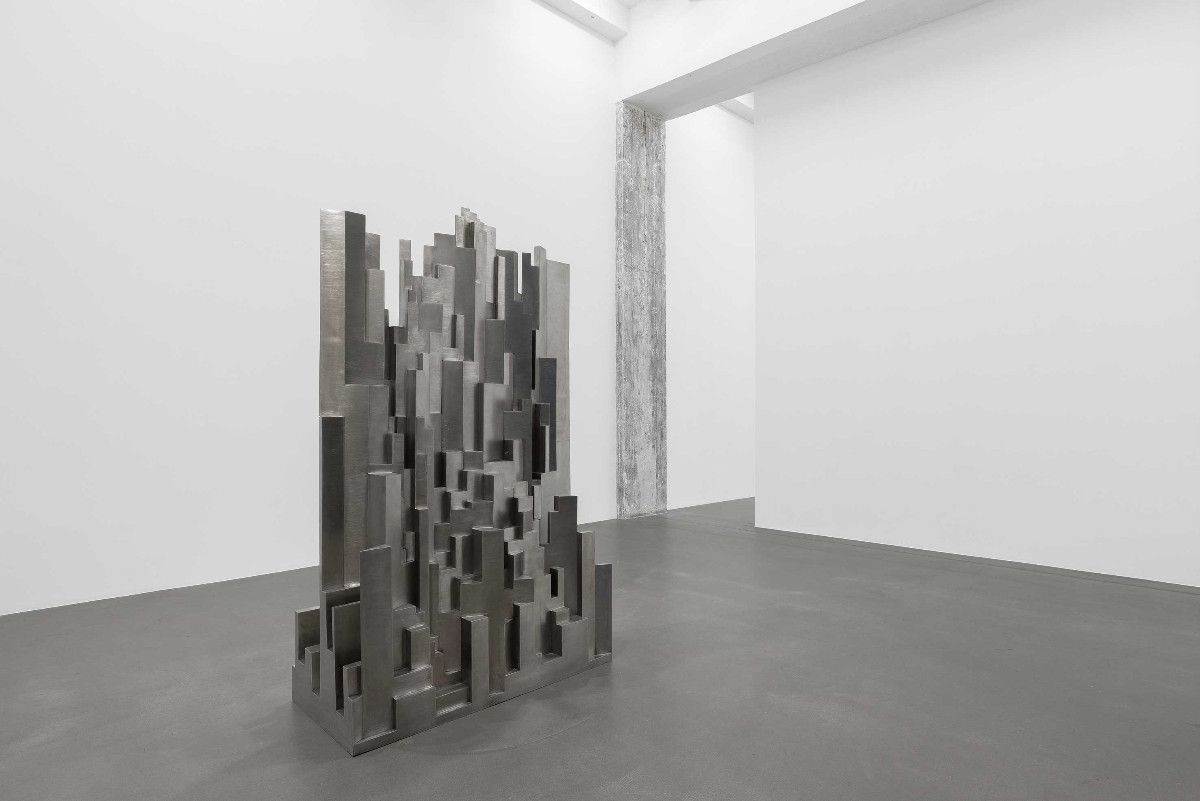
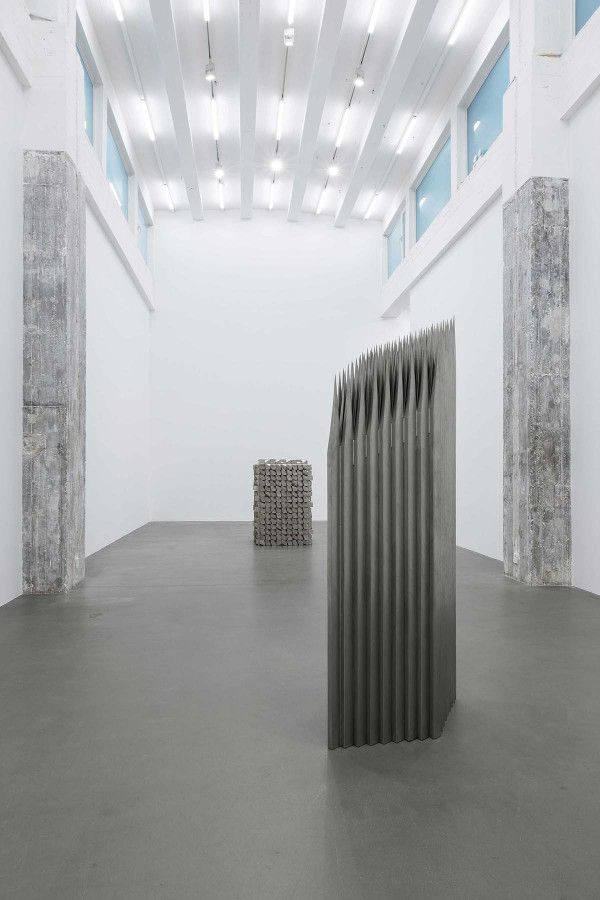
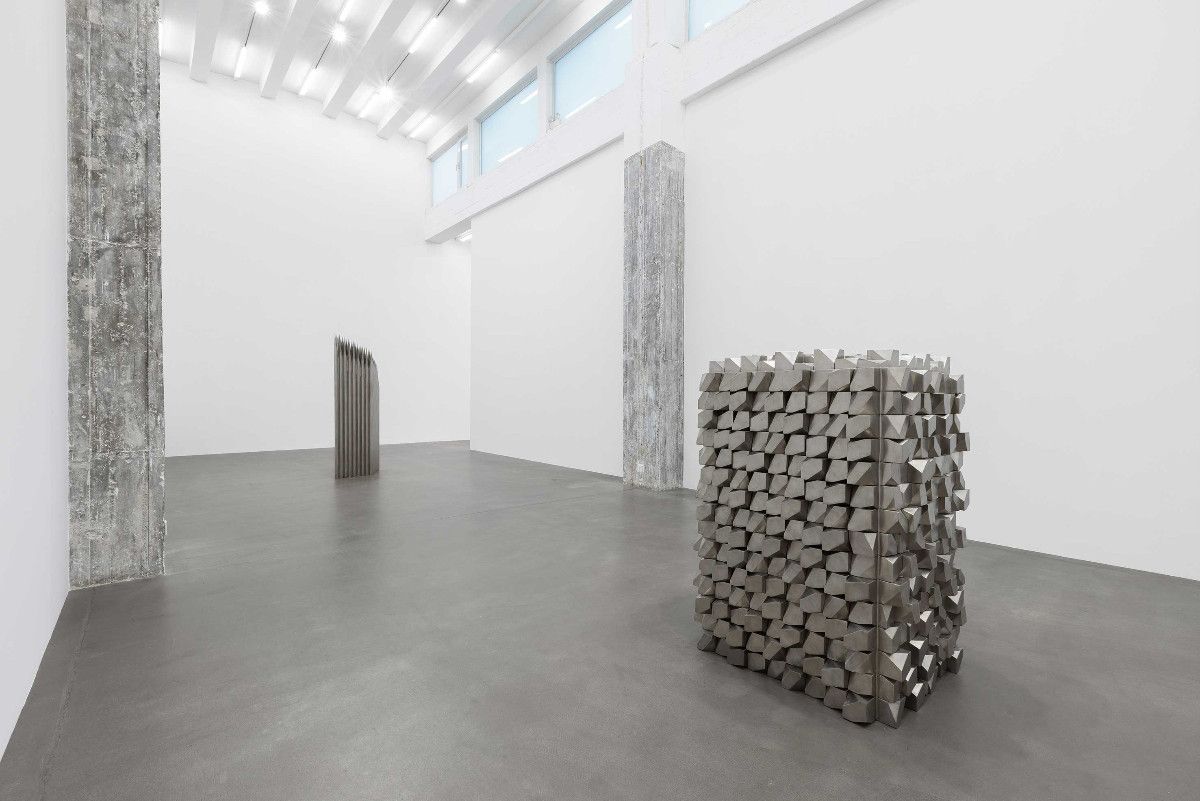
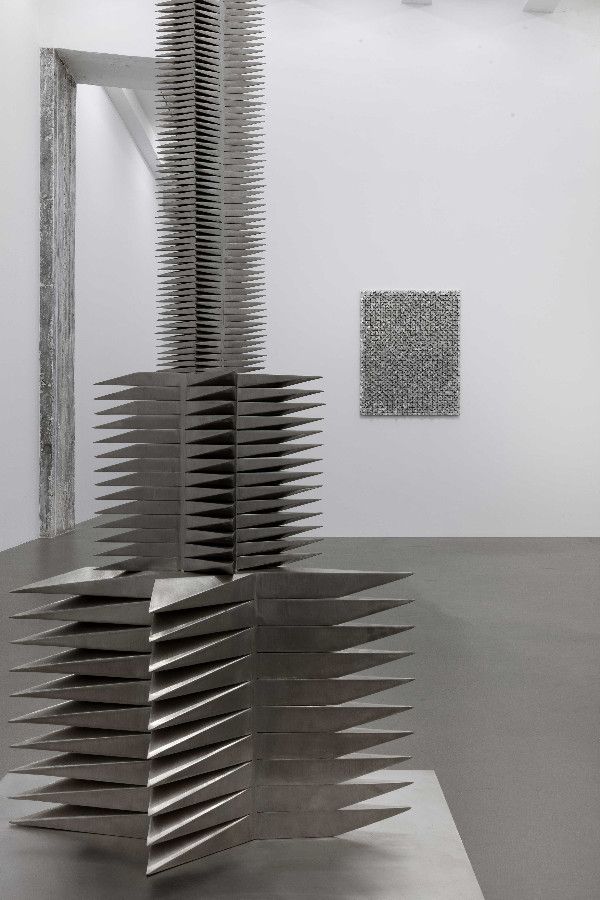
Assembly is a series of metallic, geometric installations that has been exhibited in the 2024 Shanghai Jing’an International Sculpture Project. All works are made of recycled metals from residential buildings, historic structures, abandoned construction sites, and streets. The artist dissected these materials into over 10,000 fragments. He then re-welded them into eight objects that combine features of sculpture, installation, and architecture. The process involved symmetry, rotation, overlapping, and sharpening of specific sections. Components in each piece share similar forms but retain subtle variations. Through rigorous procedures of overlapping and rotation, works are constructed as seemingly stable, yet internally wobbly structures. Such processes allude to how individuals are disciplined by the frameworks of the external world while retaining traces of individuality within the structural integrity. Yang’s practice reenacts the tension between societal discipline and the individual’s pursuit of subjectivity.
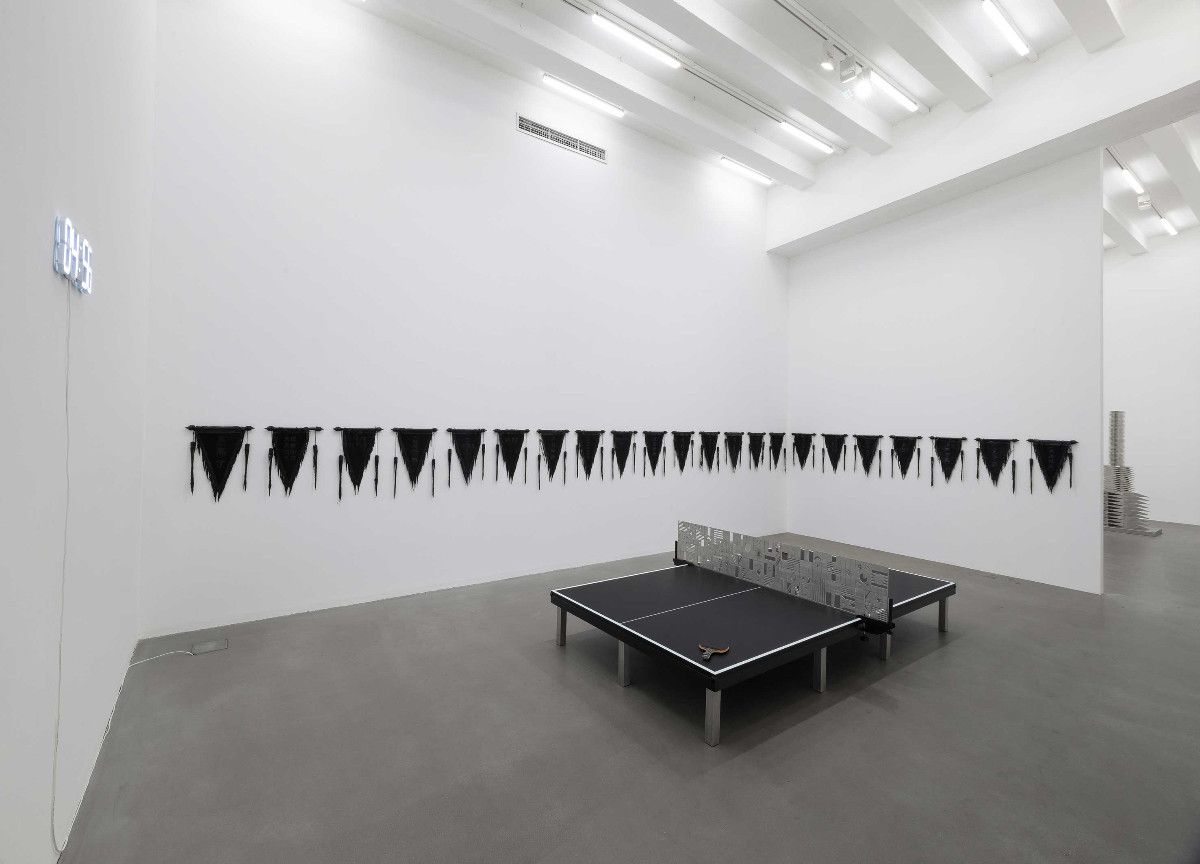
Ping Pong – Beijing Moment (2024, aluminum, table tennis table, table tennis bat, table tennis, stainless steel, pennant, digital clock, 31 × 180.5 × 1 cm (net), 64 × 264 × 188 cm (table), 57 × 43 × 3.5 cm (pennant), 15 × 44 × 2 cm (digital clock)) is an interactive installation presented in a room transformed into a solemn arena, marked by black banners and a reversed electronic clock on the wall. A black table tennis table occupies the center of the space; its shortened legs force participants to kneel while playing. The net is replaced by a stainless-steel panel twice the standard height, and the lowered table combined with the elevated net significantly increases the difficulty of play. Black banners bearing various Chinese internet slangs emphasize the work’s geographical and social context, while the backward-moving clock functions as a countdown device, generating a drastic atmosphere of a “last moment.” Within this constrained game, audiences are invited to negotiate newly imposed rules. The back-and-forth movement of table tennis, which is traditionally a symbol of communication, here manifests the tension between fixed structures and momentary release. Through repeated impacts of the ball against the stainless-steel panel and players’ distorted postures, the work questions the rigidity and authority of institutional systems.
Together, the works in Crisscross construct a spatial and conceptual landscape defined by pressure, discipline, and resistance. Through material fragmentation, structural working processes, and participatory constraint, Yang Mushi exposes the mechanisms through which contemporary systems shape bodies, behavior, and perception. The exhibition stages a persistent condition of tension where control and rupture, order and instability coexist within a continuously negotiated reality.
Exhibition views