Color to Quiet
Groupshow with works on paper by Mirko Baselgia, Klodin Erb, Urs Lüthi, Qiu Shihua, Shao Fan, Rebekka Steiger, Julia Steiner and Mai Ta
Galerie Urs Meile is pleased to present Color to Quiet, a group exhibition that brings together a selection of works on paper by eight artists from the gallery’s program. Presented across two floors, the exhibition unfolds as a sequence of shifting tones and textures - from luminous color to quiet monochrome.
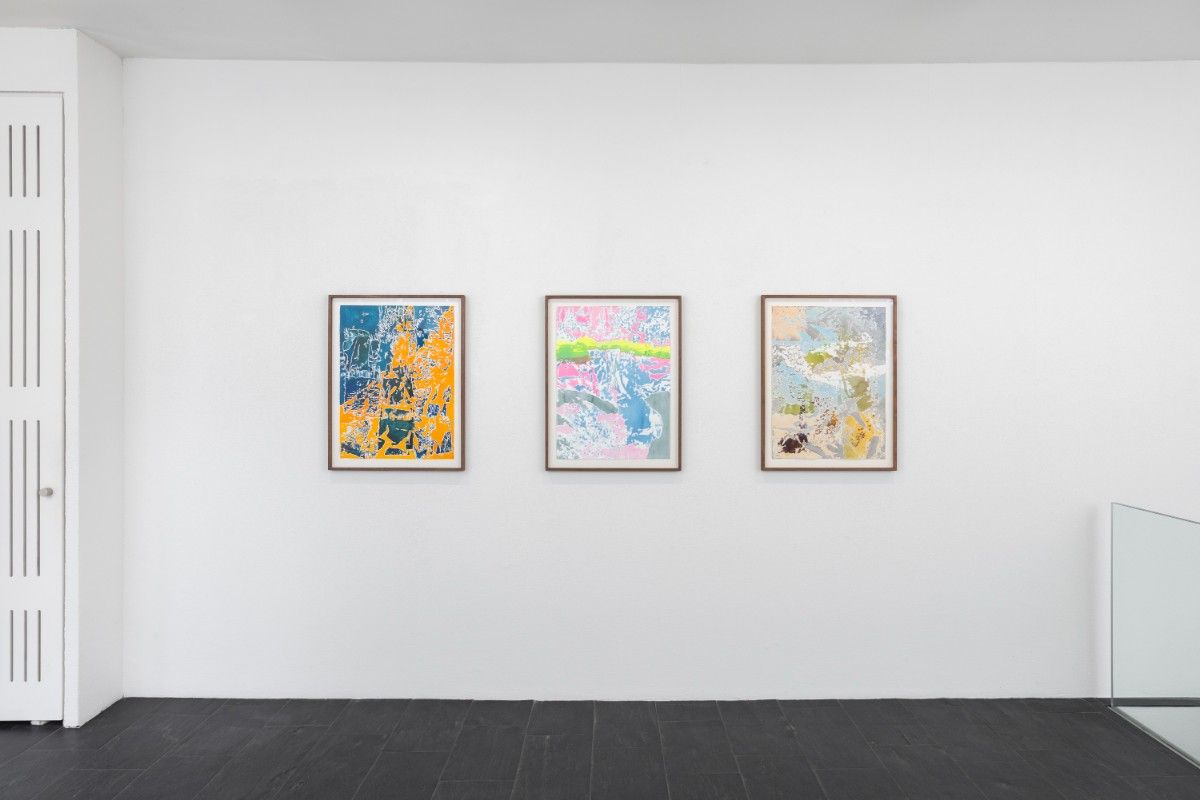
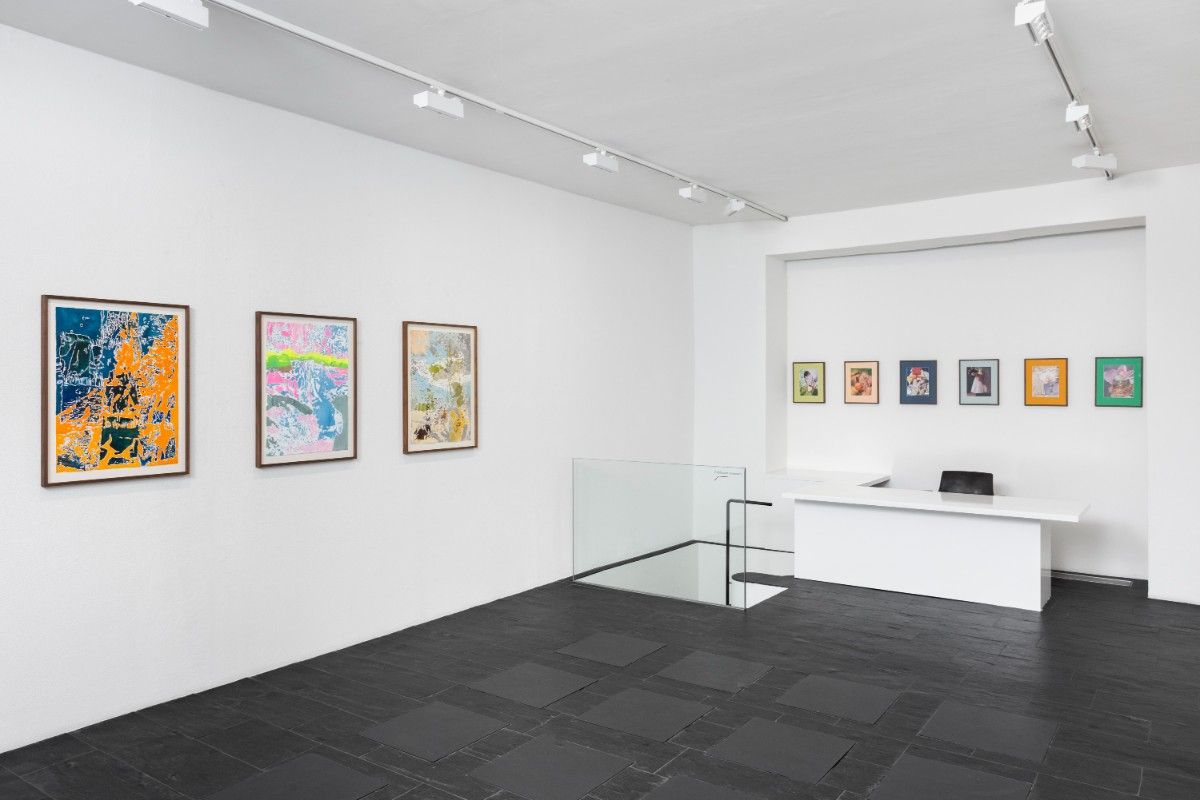
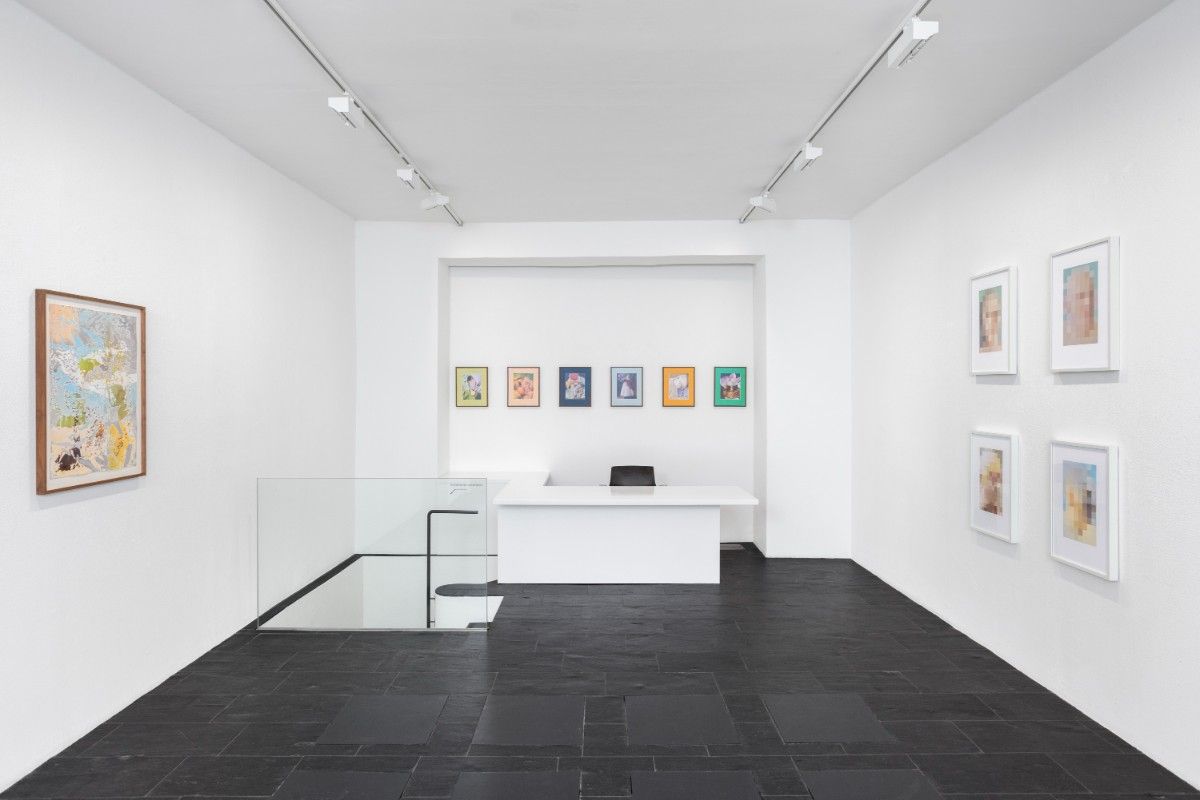
Visitors are initially welcomed by a rainbow of colors: Rebekka Steiger’s (1993, Zurich, Switzerland) abstract paintings Untitled (2023) radiate with chromatic intensity. Steiger’s compositions, developed through an experimental printing process initiated in Vietnam, use thin traditional handmade local paper to transfer paint onto Büttenpapier or canvas, producing unpredictable, textured imprints. Marking a shift from her predominantly figurative practice, these works move into landscape abstraction, where traces of process evoke memory, color, and atmosphere.
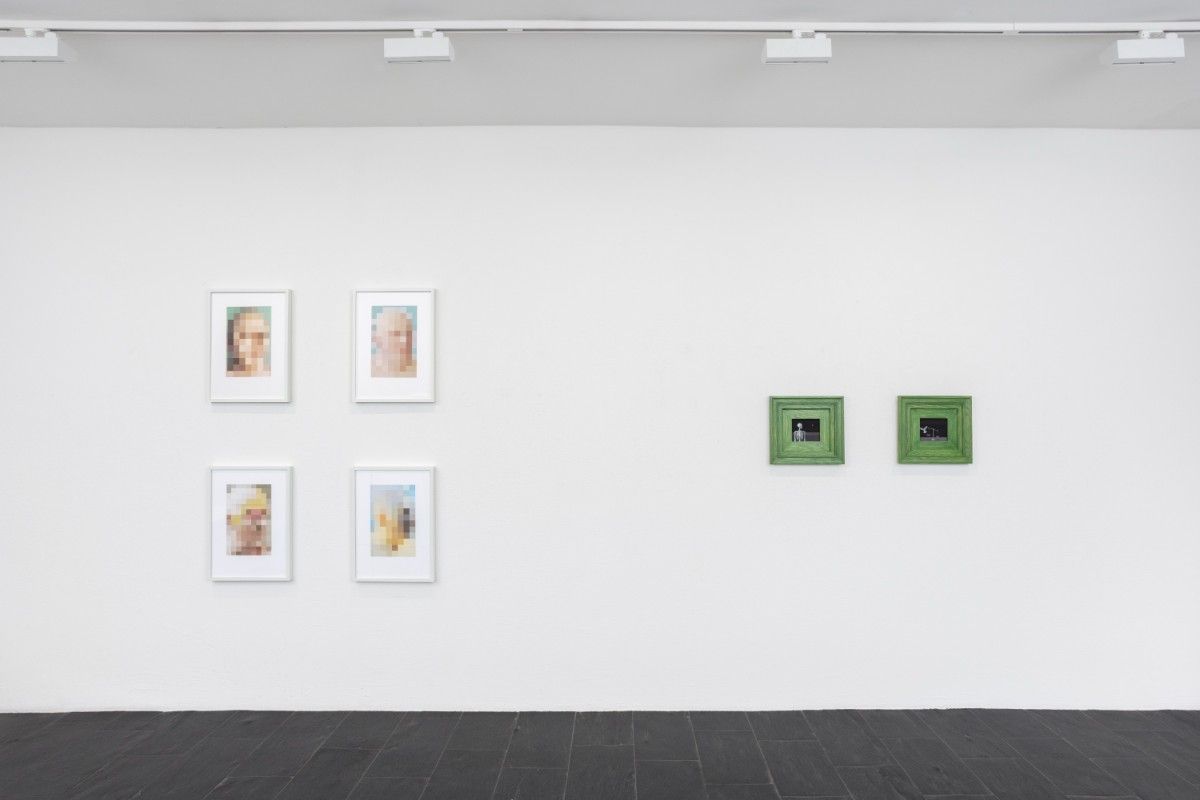
Opposite them, two small gouaches by Mai Ta (1997, Saigon, Vietnam) unfold intimate, dark narratives: the rest (2026) shows a skeleton contemplating a butterfly, and temple (2026) portrays a dove flying beside a vintage scale - quiet fragments that reflect on time, death, and freedom. Through her deeply personal symbolic language, Mai Ta’s paintings chart the terrain of the psyche - its traumas, secrets, and memories - where the act of sublimation becomes a form of release, allowing guilt to dissolve and expression to open into a space of freedom.
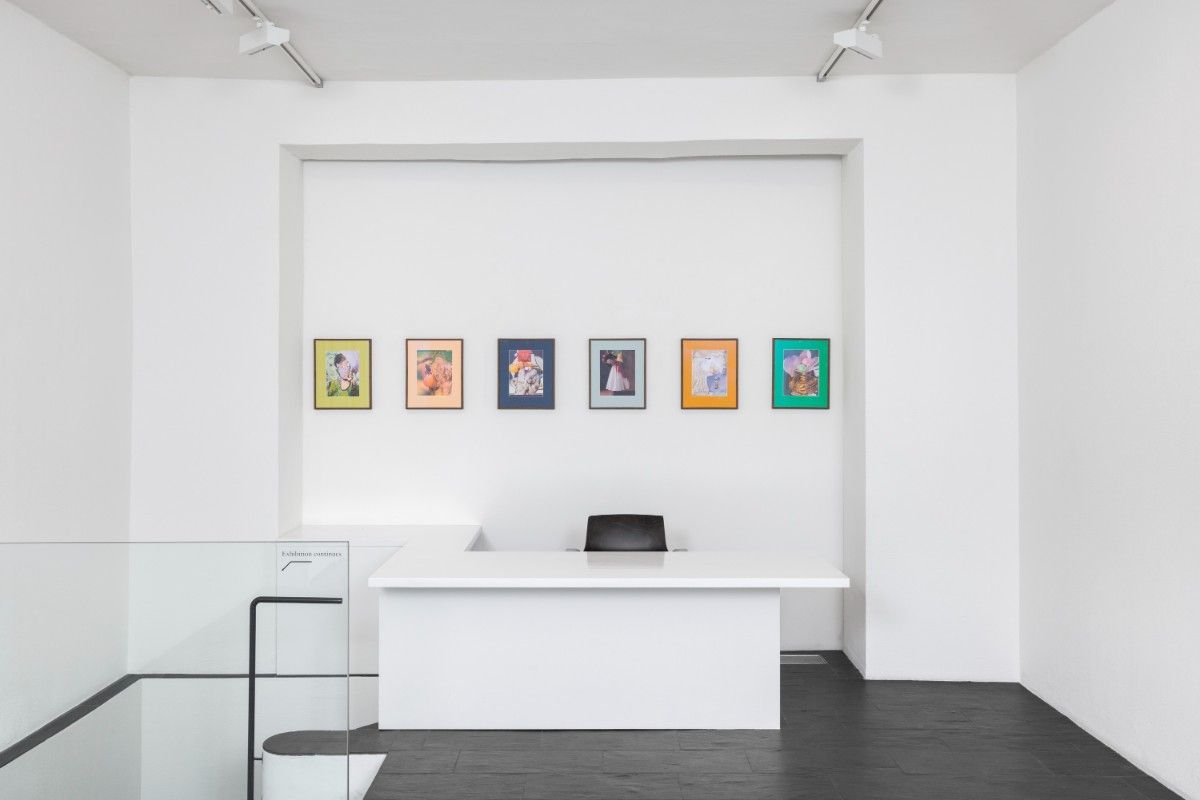
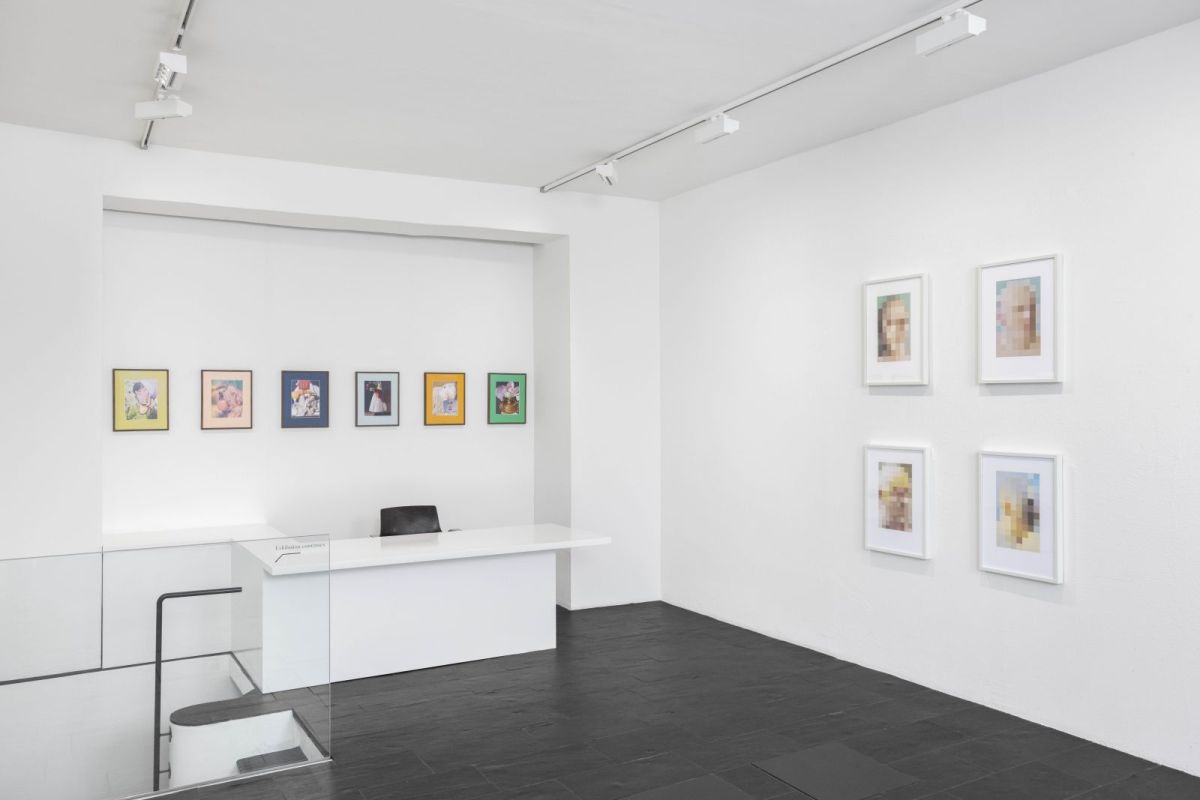
Urs Lüthi’s (1947, Kriens, Switzerland) pixelated self-portrait prints Lontano Il Reale Tempo Umano (2023), reveal a “hidden” self through delicate, pale-toned squares arranged like the pixels of a deliberately obscured image. Developed from digital photographs of himself - manipulated on the computer prior to printing - the works present a deconstructed version of the artist. In Klodin Erb’s (1963, Winterthur, Switzerland) collage series Essen, Sex und Kleider (2021-2022), bodies and faces appear fractured and reassembled, evoking the fragile reconstruction of identity. Lüthi’s practice often explores the boundaries of selfhood and the performative aspects of identity, working across a range of media - including painting, sculpture, and photography - to probe the ways we present, and conceal, ourselves. Similarly, Erb’s collages deconstruct everyday imagery to question social norms, desire, and the fluidity of personal and collective identities, revealing how meaning is constantly negotiated through visual fragments.
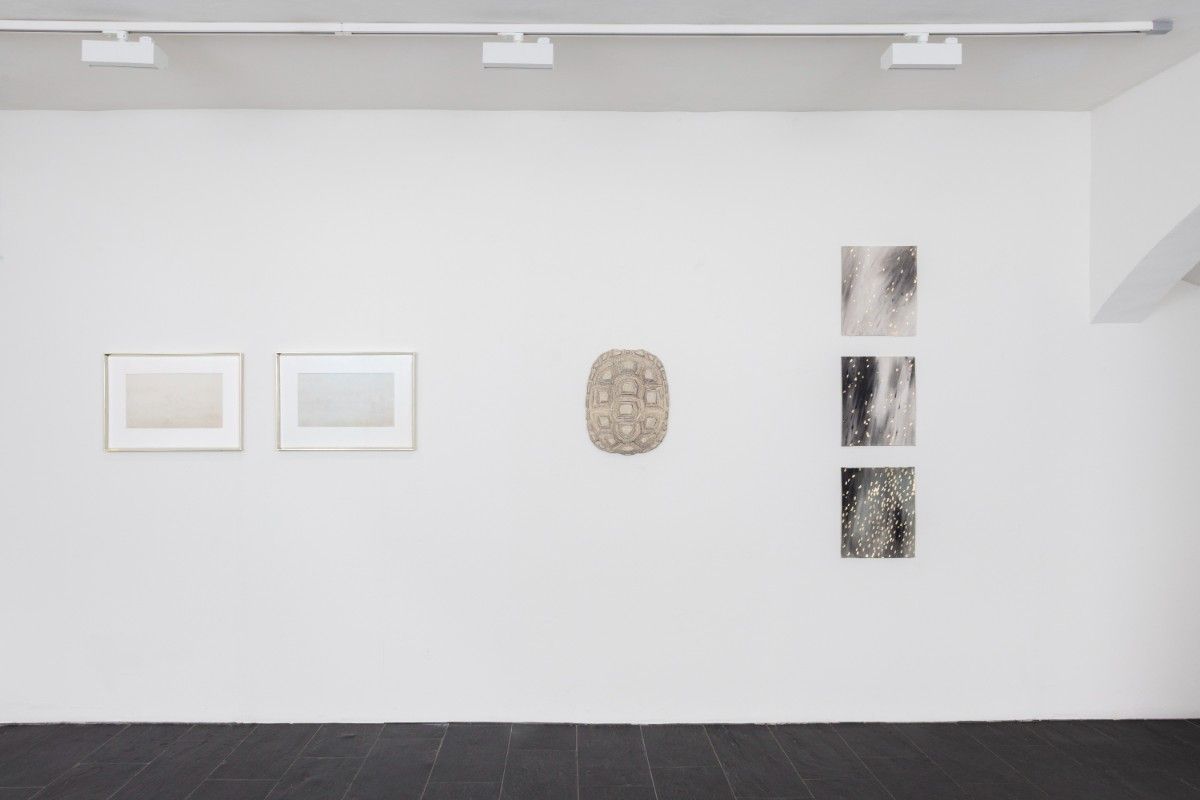
Descending to the lower floor, visitors enter the quiet, final section, where light withdraws into black and white, and brightness and obscurity converge. A landscape of black-and-white works invites attention to the nuances of light, shadow, and reflection. In Julia Steiner’s (1982, Büren zum Holf, Switzerland) series Lichter Regen (2025), golden droplets shimmer against the darkness, at once reflecting and resisting the surrounding void. Steiner’s practice often explores the fleeting interplay of light and atmosphere, capturing ephemeral moments that balance delicacy with intensity.
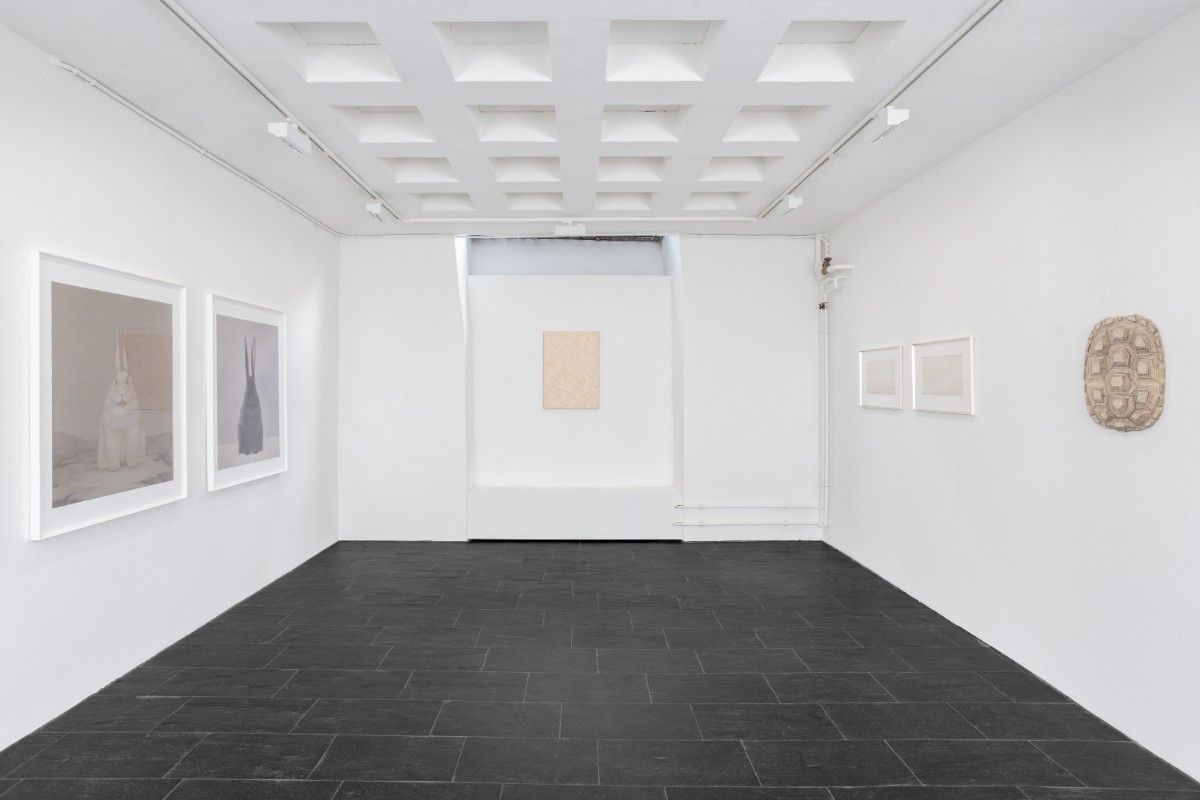
Qiu Shihua’s (1940-2025) monochrome watercolors Untitled (2000) radiate light from what at first glance appears to be a completely white canvas; the viewer’s gaze gradually unravels their hidden dimensions - a quiet invitation to contemplation. Throughout his work, Qiu Shihua sought to dissolve the boundary between object and space, creating meditative landscapes where subtle shifts of tone evoke a sense of infinite depth.
Mirko Baselgia (1982, Lantsch/Lenz, Switzerland) explores the balance between fragility and form. In White State (2020), hundreds of delicate paper fragments are sewn onto a linen canvas, evoking the shimmering surface of fish scales. With Tartaruga Canberra (2021), he creates a sculpture from stacked newspaper pages, transforming a living being into a state of totemic stillness. While paper is most commonly encountered as a surface, Baselgia expands its possibilities by unfolding its three-dimensional potential in sculptural form. Observing the dynamics and structures that shape our world, Baselgia reinterprets natural formations in unexpected materials, combining philosophical reflection with sensorial engagement to create poetic, transformative experiences that heighten our perception of space and the surrounding world.
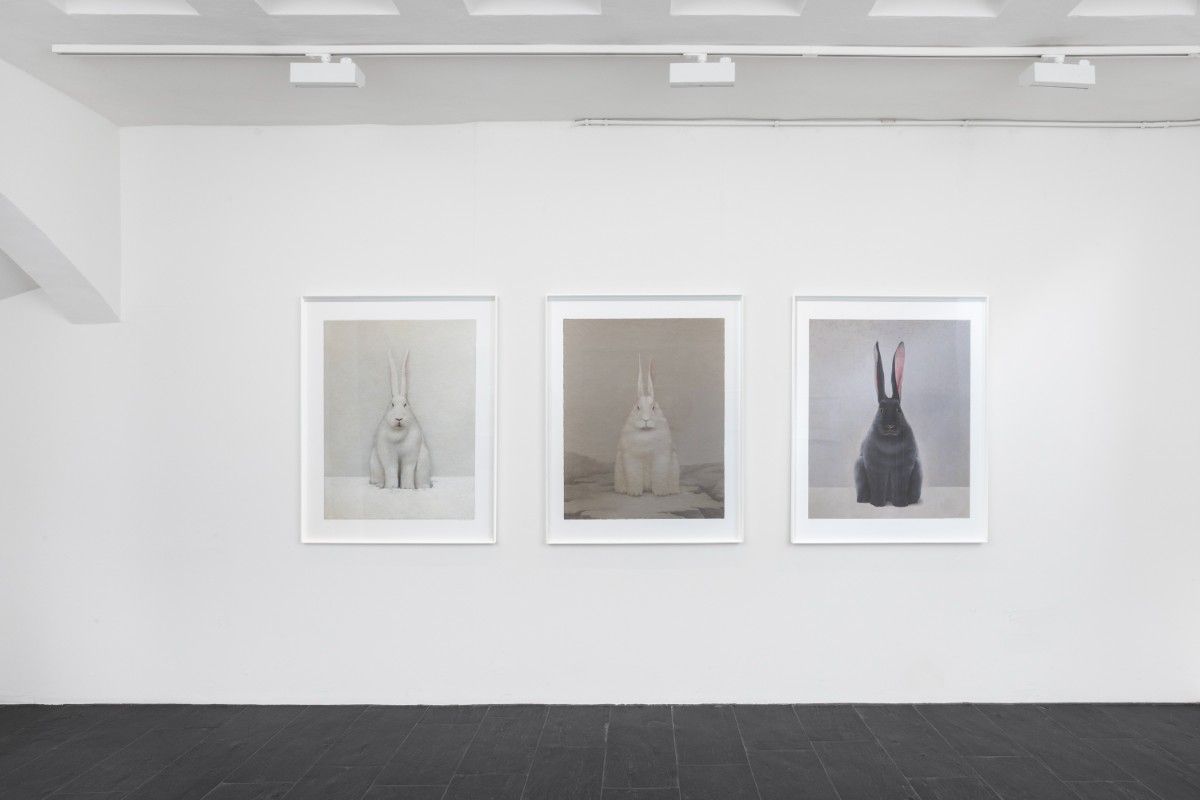
Facing these, Shao Fan’s (1964, Beijing, China) Black Hare, Landscape Hare and Snow Rabbit (2011) takes center stage. The hare seems to move from shadow toward light, embodying the dialogue between darkness and illumination. In Shao Fan’s vision, rooted in Chinese aesthetics, beauty does not emanate from the object itself but resides in the patterns of shadow - a serene counterpoint to Western notions of clarity and brightness.
April 1 – May 23, 2026
Galerie Urs Meile, Zurich Rämistrasse
Opening:
Wednesday, April 1, 6pm – 8pm
OPENING HOURS
Wednesday to Friday, 11 am – 6 pm
Saturday, 11 am – 5 pm
and by appointment
DOWNLOADS