
Online Viewing Room
Zhang Xuerui
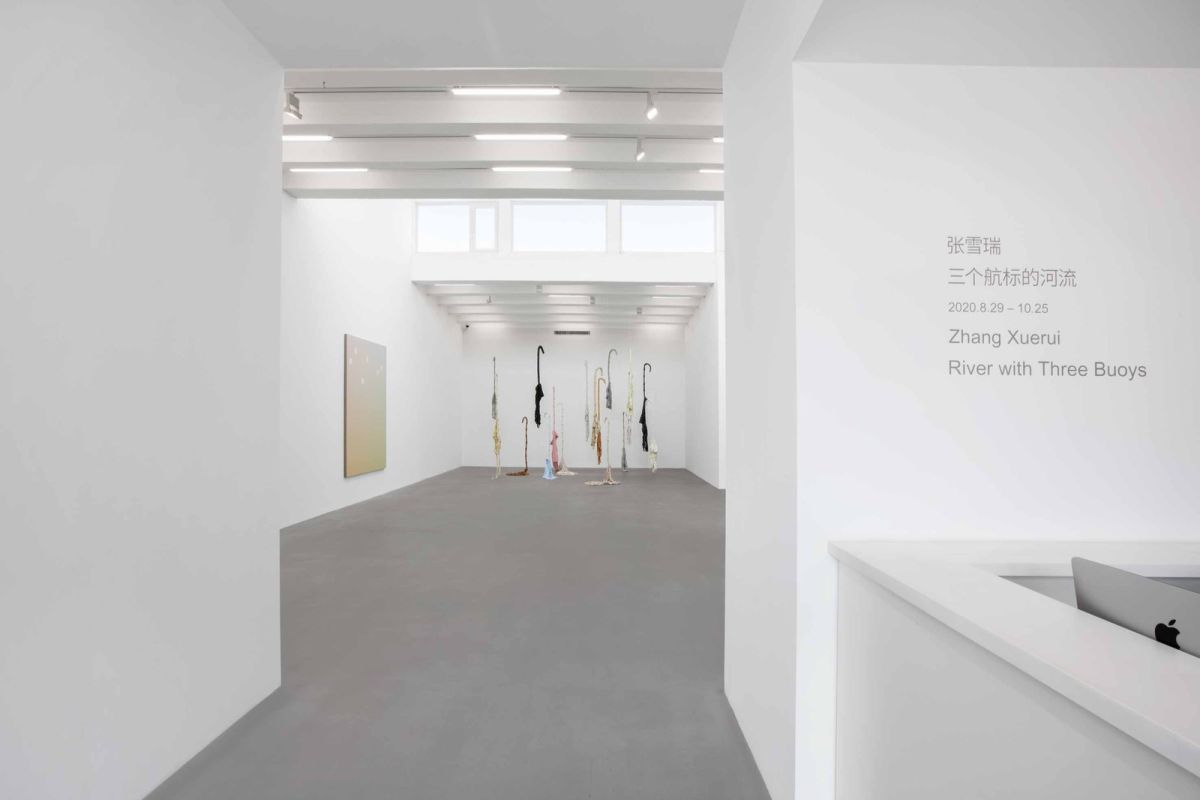
River with Three Buoys
29.8 - 25.10.2020
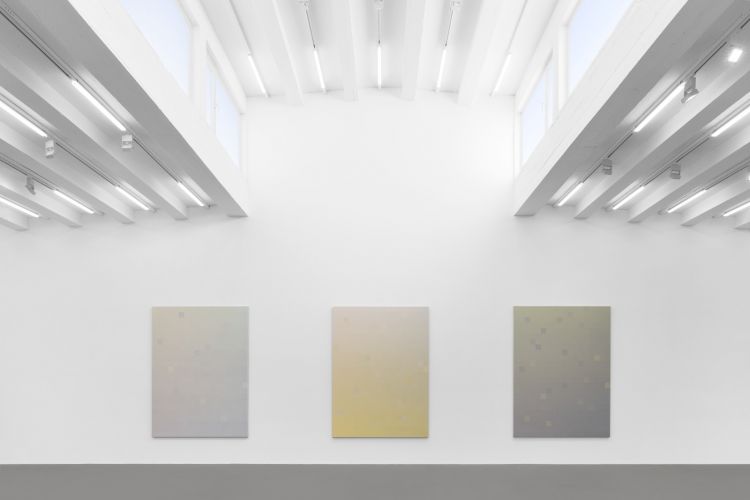
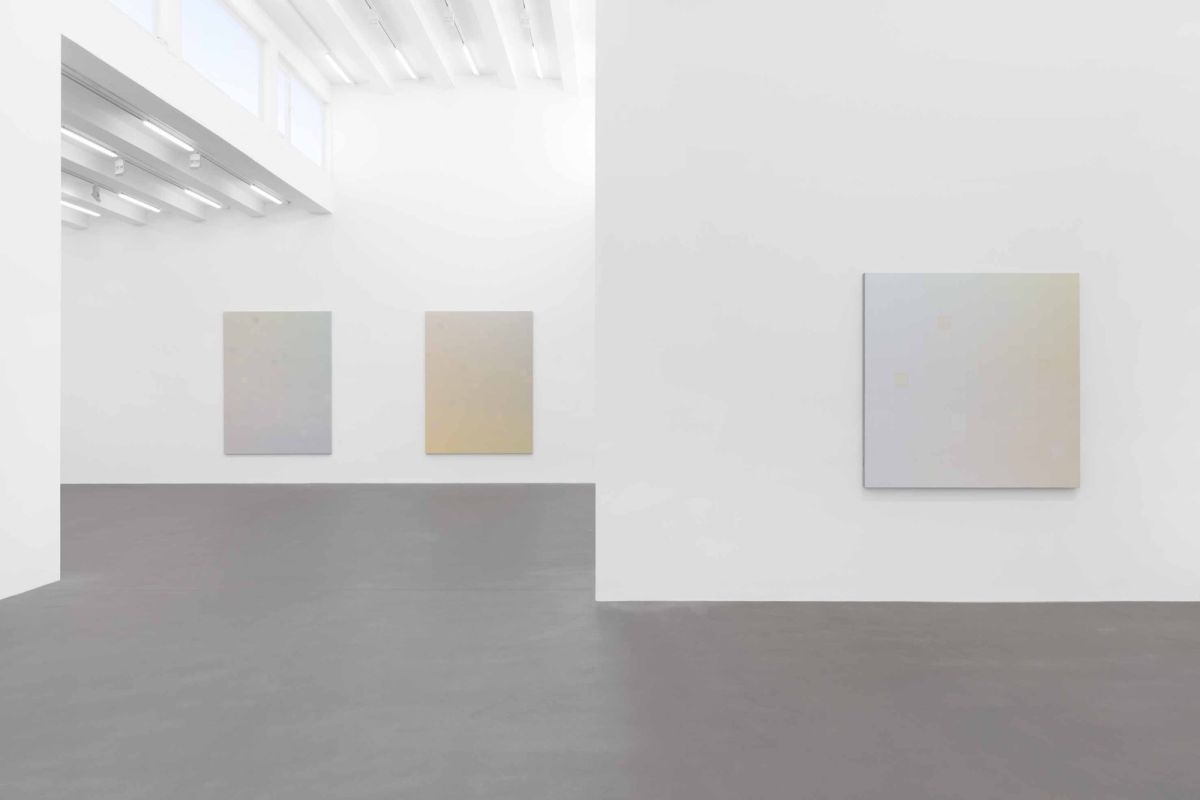
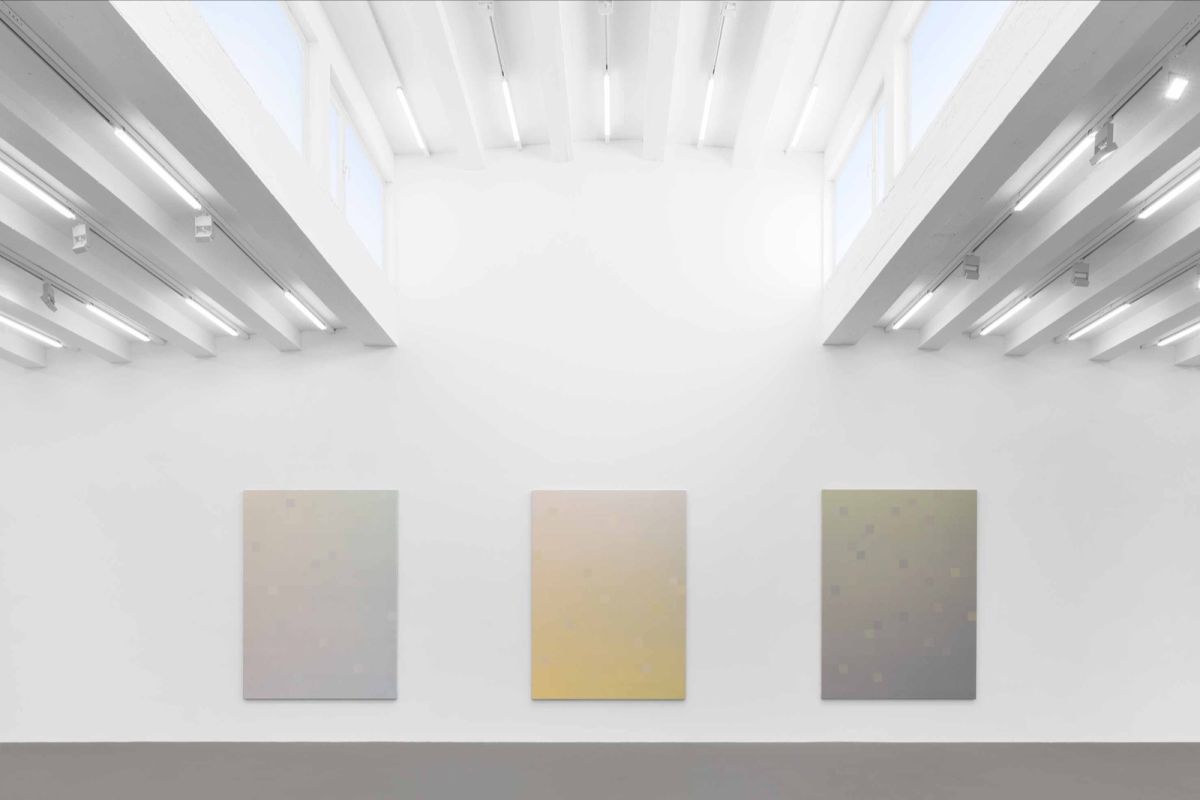
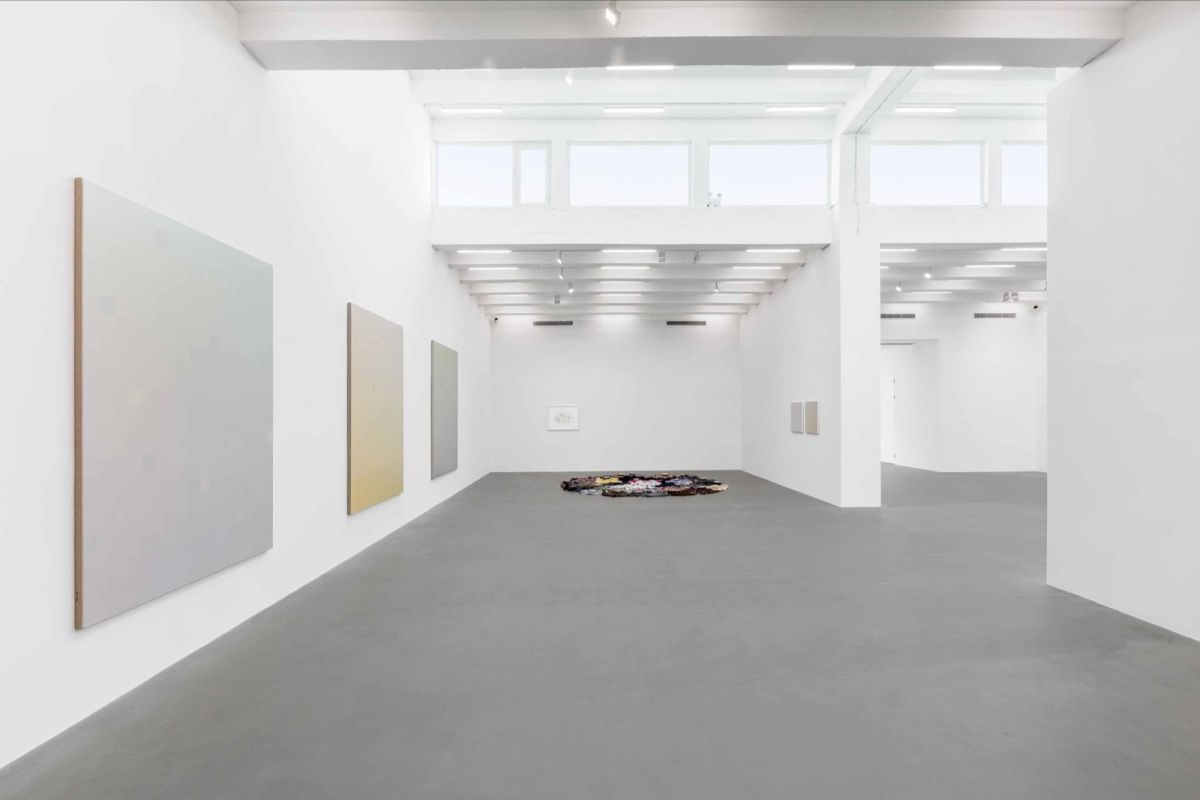
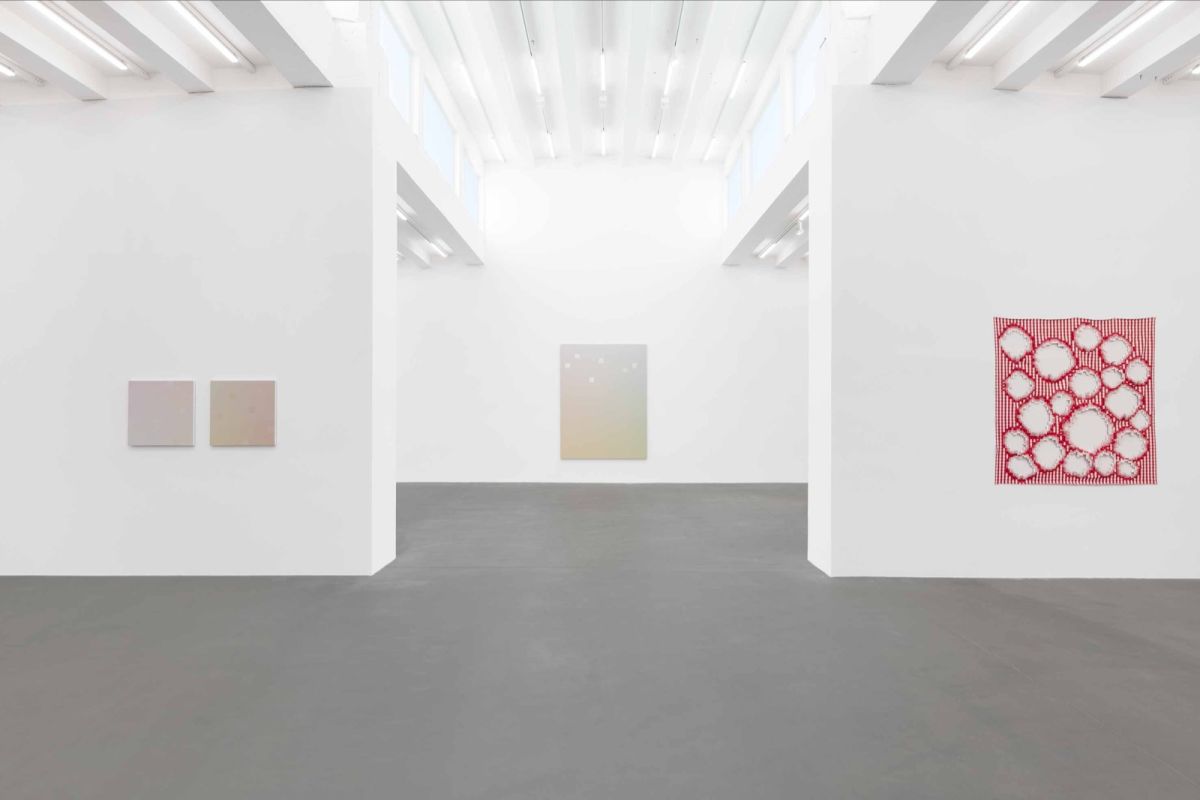
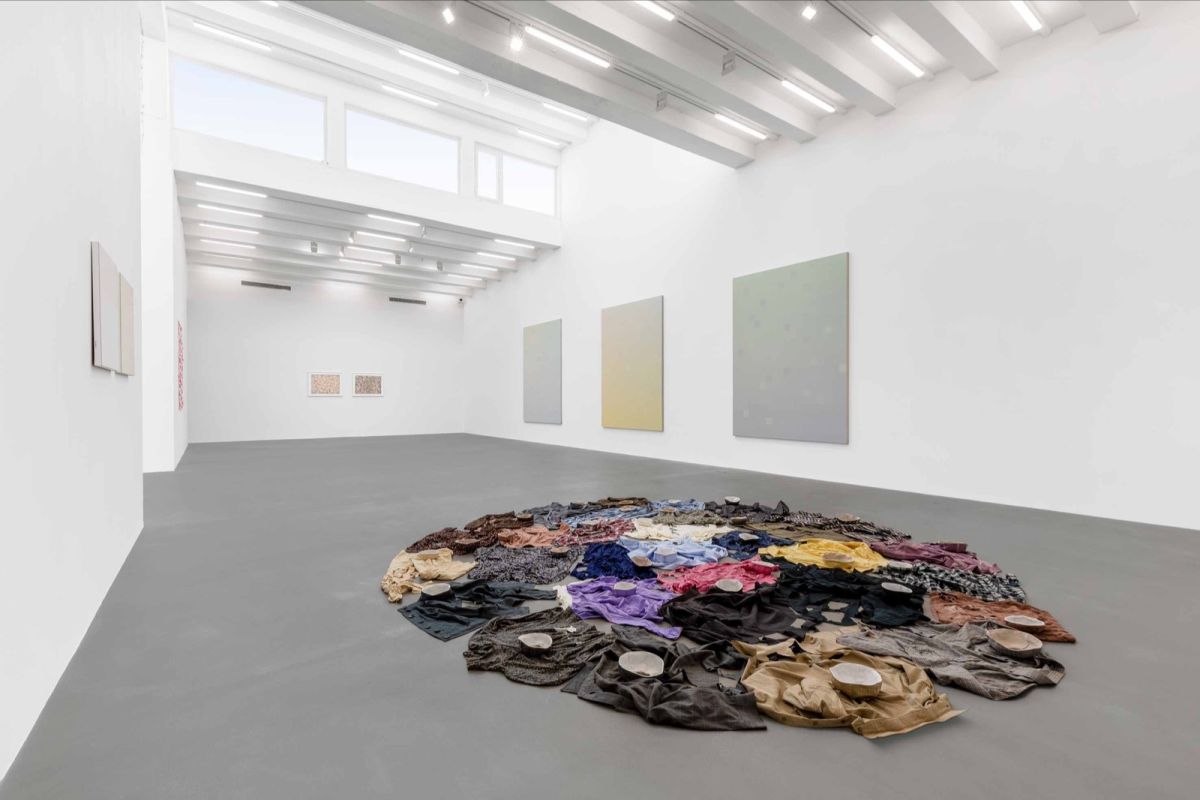
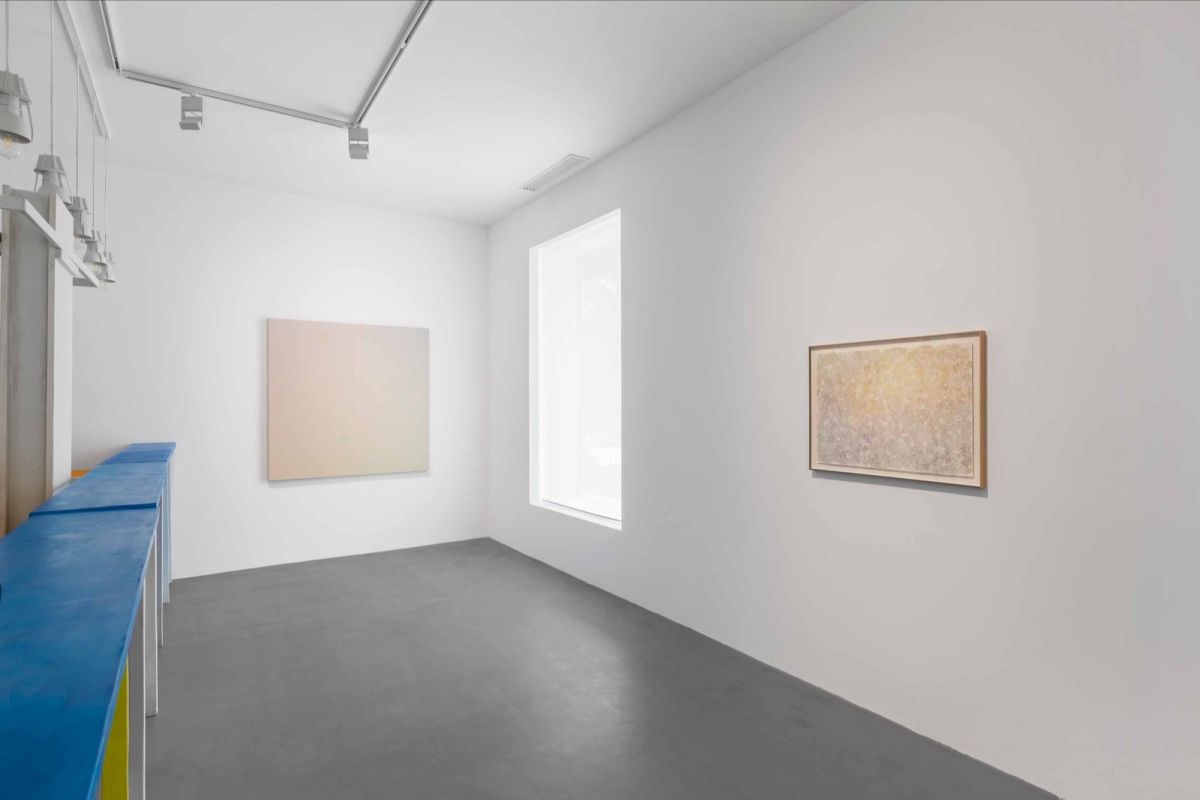
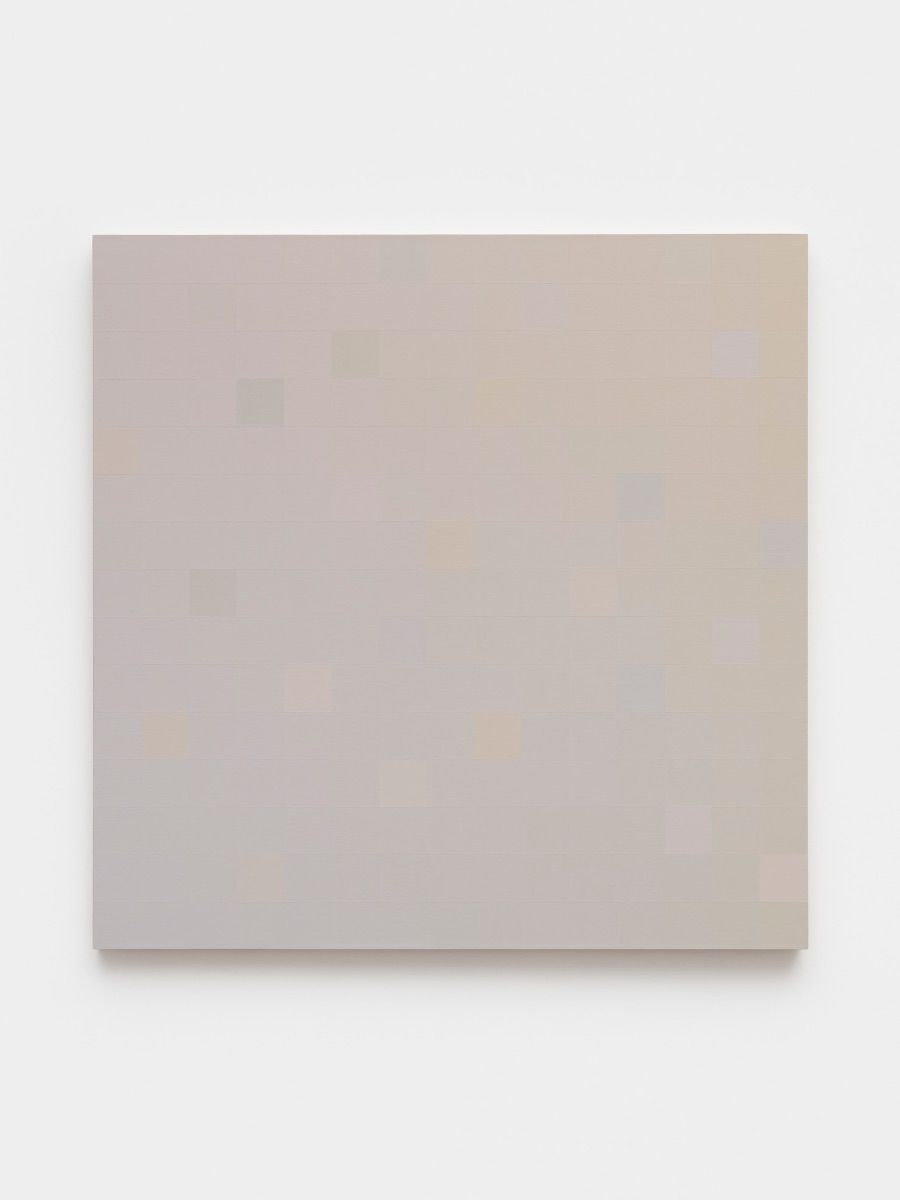
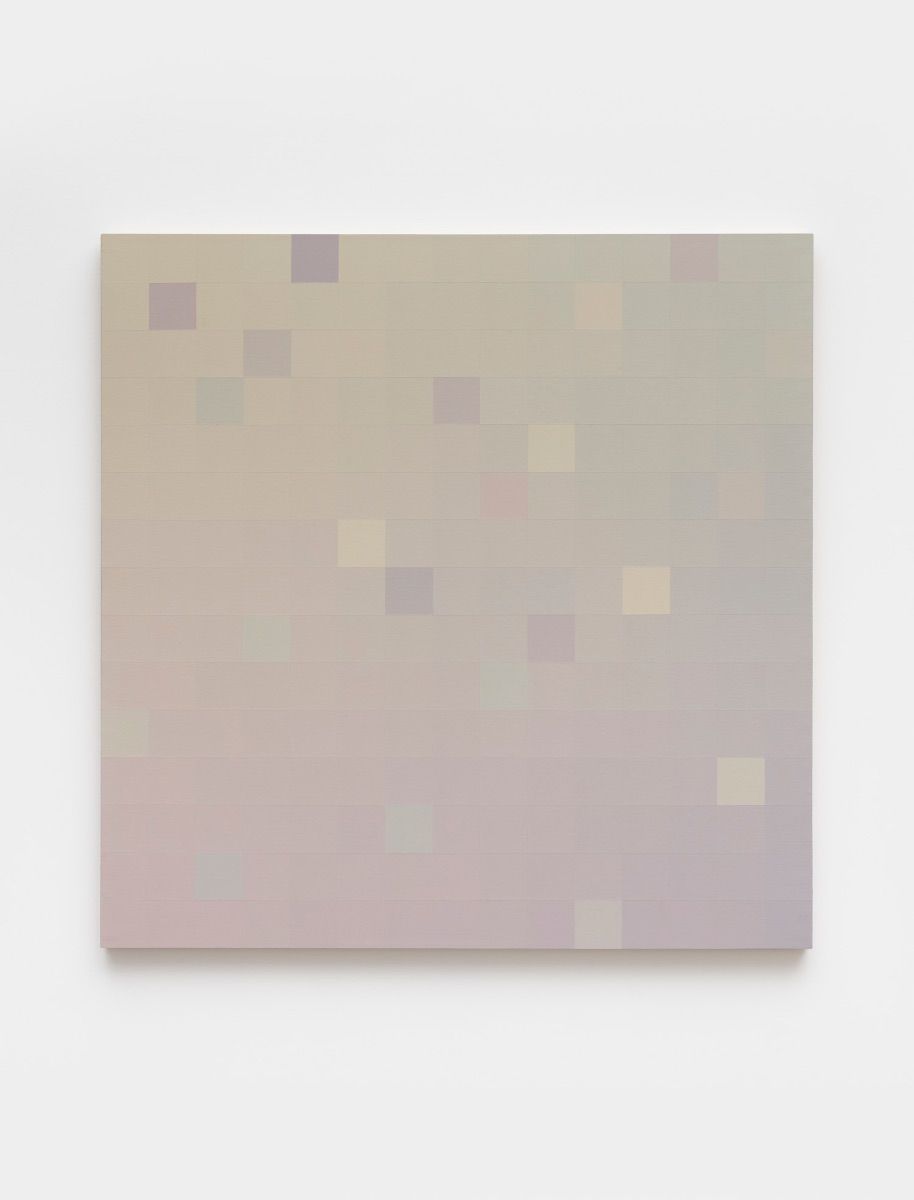
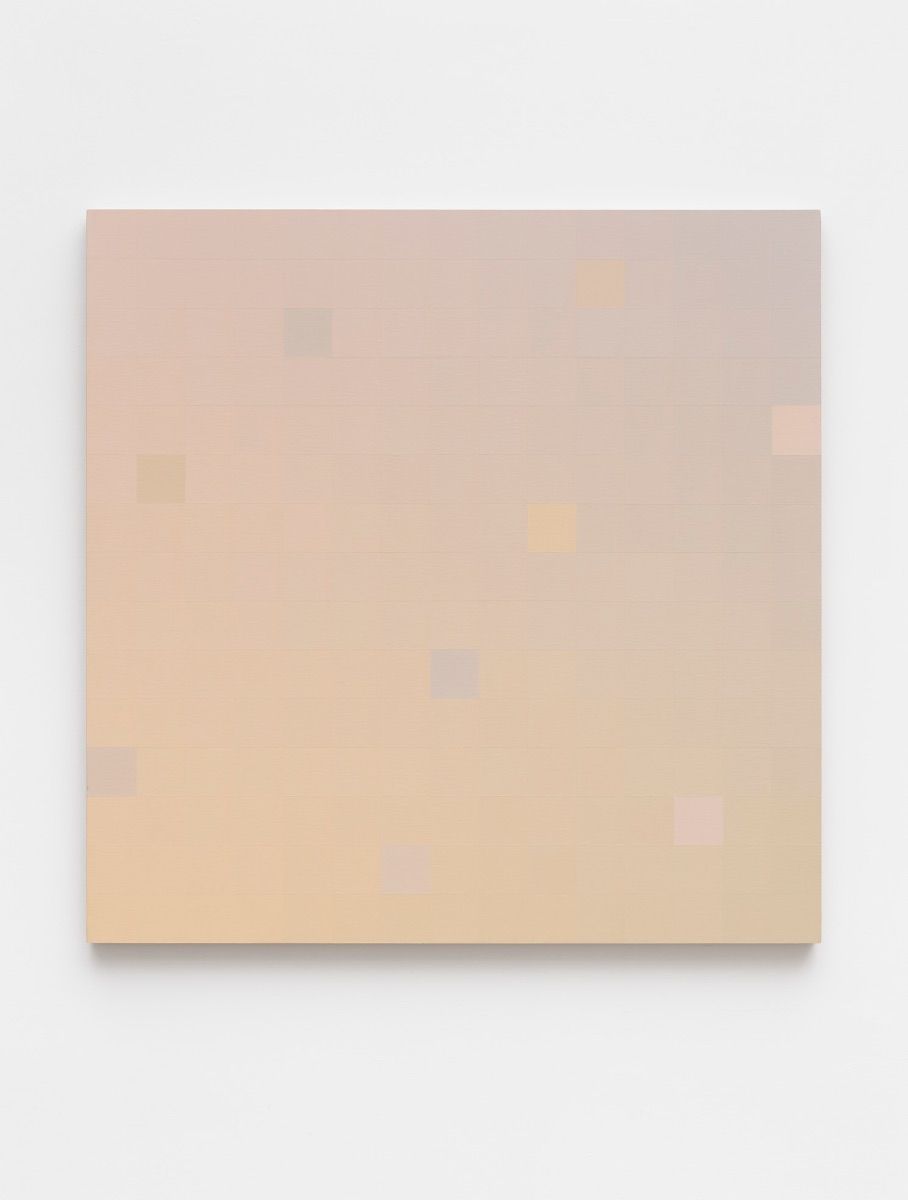
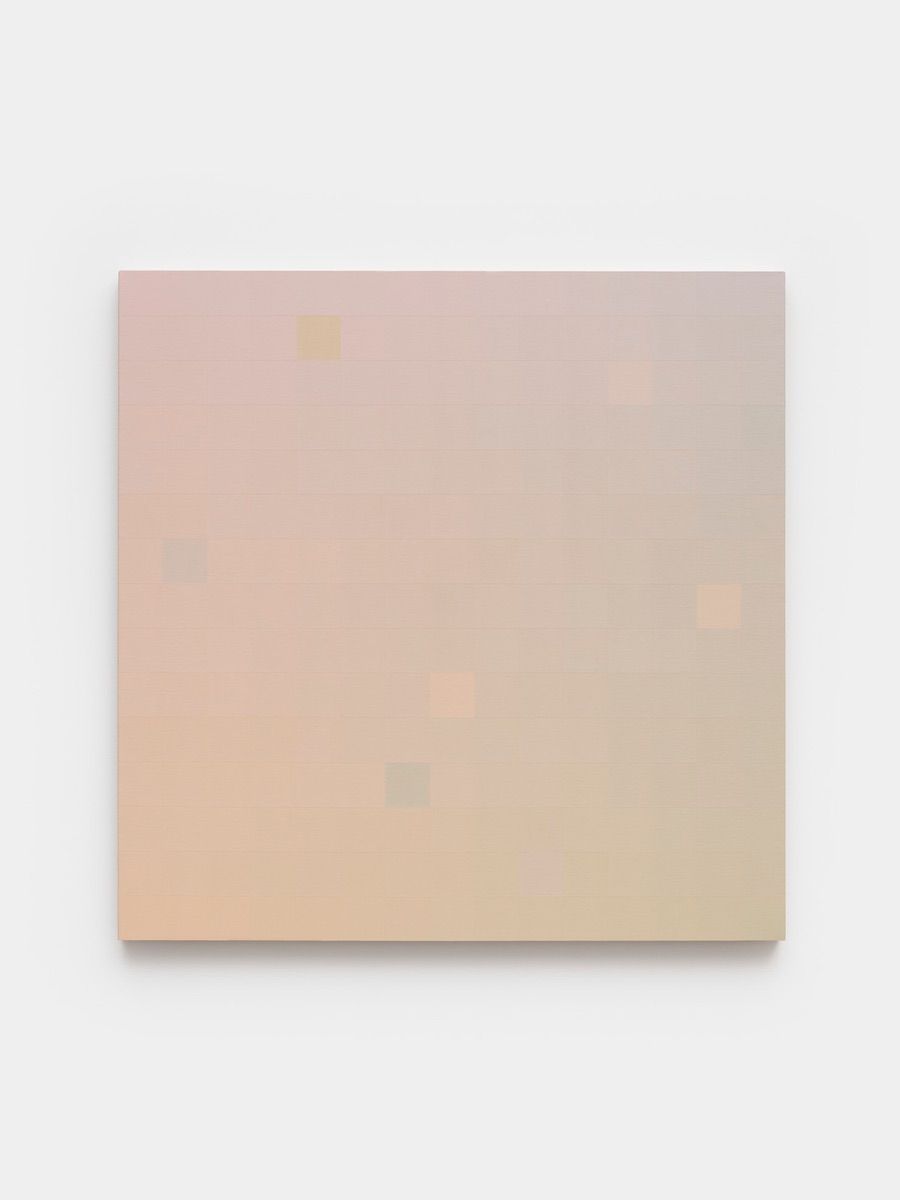
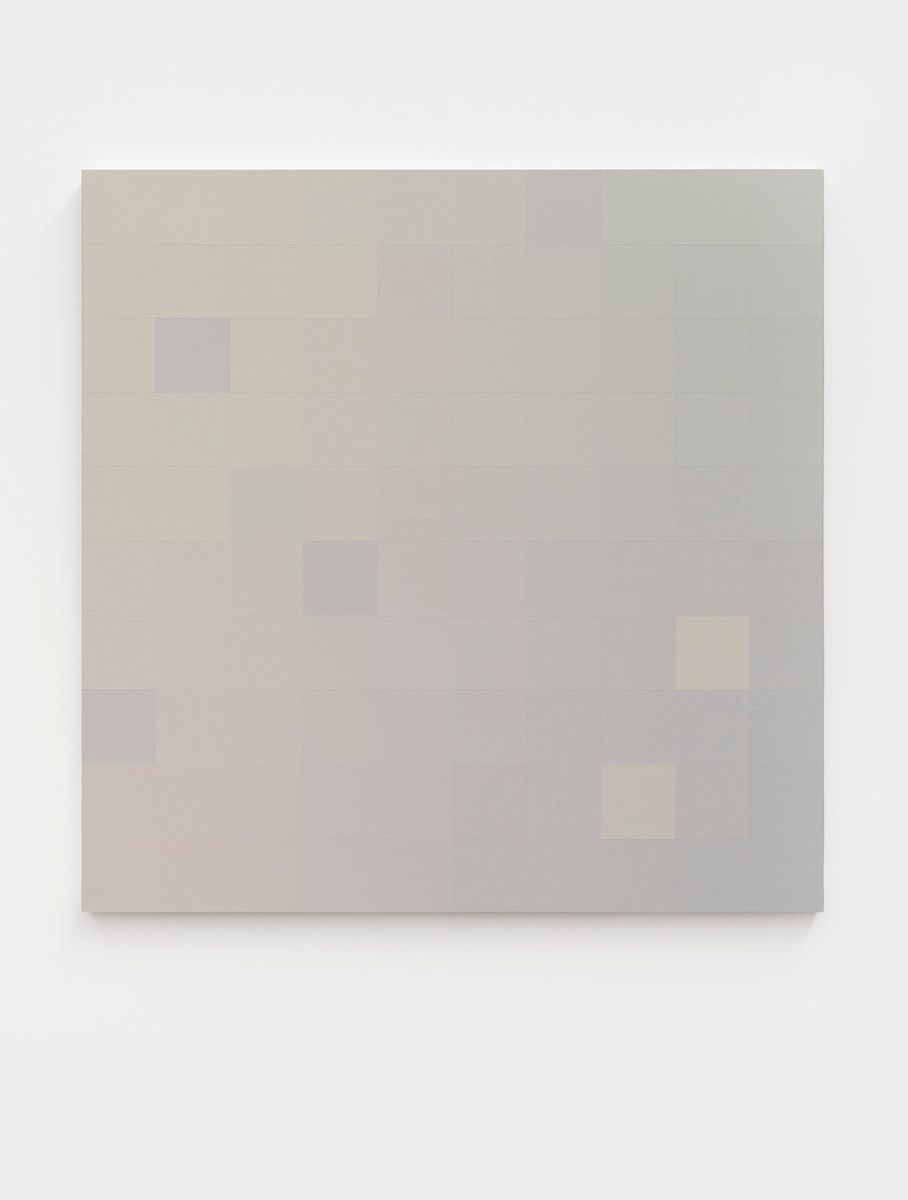
We can imagine Zhang Xuerui’s paintings as building facades, with equal squares dividing the entire canvas. These squares are parallel to the frame, positing a geometric certainty. The dynamic of the painting comes from its colors—in most cases, each square of color is linked to its neighbor by an almost imperceptible color gradient, making the overall rhythm appear soft and unhurried. The interval shifts in color achieve spatial depth in the picture, but the story within each window is concealed, like flickering lights of varying tone faintly shining through the curtains, while we can never know exactly what is unfolding behind the curtains. They tell a story through non-representational methods, or more precisely, they correspond to a stream-of-consciousness monologue.
“I hope to manifest in my paintings intimate relationships that are hard to realize in real life, like the kind of intimate relationship I have with colors.” 1She has not pulled herself or us to the metaphysical level, but has instead stressed the parallel nature of reality through logicalized production. “The picture is ‘close,’ while the theme is ‘distant’.” 2 This is like when you turn on the car stereo, and get into the melody of a song, becoming isolated from the swarm of traffic around you, or even the entire urban environment, your consciousness flowing within that sense of time altered by the melody. For Zhang Xuerui, the squares are elements constructing her abstract melody. She has transplanted her emotions onto these squares, steadily realizing that intimate relationship. Here there are none of the drastic undulations or perturbations of reality; anxiety and fear have been transformed. The stronger her intimacy with the colors, the more isolated she becomes from reality.
As far back as the 1920s, Le Corbusier and his friends were saying that a painting is a formula. 3 This can help us further understand Zhang Xuerui’s creative method. She begins by selecting the “three primary colors” of that painting, three color fields, and places them “in three corners of the canvas, which I call A, B and C. If there are ten squares between A and B, then each square is a different ratio of mixture between the colors A and B, forming a gradual color transition. The progression of the colors setting out from these three corners to the fourth corner is unpredictable. The color that ends up in the fourth corner is entirely an ‘accident.’” 4 You can get a sense of how her painting process is like a meticulous computation, with the outcome of the fourth corner being calculated virtually one step at a time. It is an “accident” in that textures, emotions or hidden desires form active factors that follow along the entire creative progression, until the fourth corner redeems the sensational undercurrents. When this color field emerges, it implies a certain harmony.
Gazing at these pictures, I sometimes suspect that she has intentionally put off the arrival at the final outcome. Under the supposition of the three primary colors, the colors are constantly combined, implying that she spends much time in phases of gray, patiently laboring and circling back. Like a woman of the ancient world absorbed in her weaving, Zhang quietly enjoys and magnifies this method that is at once for passing and resisting the passage of time. The completed works show no traces of being covered over day after day, but are instead juxtaposed as still frames, as if the traces of the passage of each needle, each thread, are presented in their entirety, demanding close rumination.
In her most recent works, she has changed the excessively slow progression of before, a shift that appears in the picture as relatively strong contrasts in color from one field to the next, or even within a cluster of color fields, in something like a high note suddenly bursting out of a musical movement, creating a floating effect and highlighting the sense of motion in the picture. But her basic methodology has not changed. The visual precision brought about by the contrast, and the overall elegance and harmony, still stand as the distinctive markers of her personality. Her three primary colors can be seen as three buoys that give her a cross section of the river of time. Even that unpredictable fourth corner merely implies a single square in the picture; it won’t flow out of bounds or turn against the existing structure. It is called ending, but it has actually taken part in the entire flow, an equal element and component of the process, which is why when Zhang Xuerui completes a painting, she can change the orientation in which the painting is hung.
Text: Zhu Zhu
Zhang Xuerui (born in 1979 in Shanxi, China) currently lives and works in Beijing, China. She graduated from Central Academy of Fine Arts in Beijing in 2004. Her recent solo exhibitions include: The Everyday as Ontology, Galerie Urs Meile, Lucerne, Switzerland (2019); The God of Small Things, Art Basel Miami Beach-Kabinett, Miami, USA (2018); Colours in A Breeze: Zhang Xuerui Solo Exhibition, Leo Gallery, Hong Kong, China (2017); Zhang Xuerui: Recent Works, Ginkgo Space, Beijing, China (2017). Recent group shows include: You Are a Goddess, You Are a Demon, Boxes Art Space, Shenzhen, China (2019); Letters from Beijing, Gwangju Museum of Art, Gwangju, Korea (2019); The Exhibition of Annual of Contemporary Art of China 2017, Minsheng Art Museum, Beijing, China (2018); Encounter Asia—Multi-vision of Youth Art, the Museum of Sichuan Fine Arts Institute, Chongqing, China (2018); Nonfigurative, Shanghai 21th Century Minsheng Art Museum, Shanghai, China (2015); Negotiations – The 2nd Today’s Documents 2010, Today Art Museum, Beijing, China (2010). She participated in Artist in Residence program “Kulturkontaka Austria” in Vienna in 2015. Her works have been collected by public collections including White Rabbit Gallery and Cruthers Art Foundation.
1 Zhang Xuerui Interview: “Clouds on the Edge of the Sky” (Tian Bian Yi Duo Yun), Cao Siyu, Hi Art, October 24, 2015.
2 ibid.
3 Arsén Pohribn••, Abstract Painting, Wang Duanting, trans., Gold Wall Press, 2013.
4 Zhang Xuerui interview.
225 201904 - 2, 2019
acrylic on canvas
150 x 150 cm
SALES INQUIRY
225 201906, 2019
acrylic on canvas
150 x 150 cm
SALES INQUIRY
225 202002, 2020
acrylic on canvas
150 x 150 cm
SALES INQUIRY
225 202004, 2020
acrylic on canvas
150 x 150 cm
SALES INQUIRY
100 201907 - 1, 2019
acrylic on canvas
100 x 100 cm
SALES INQUIRY
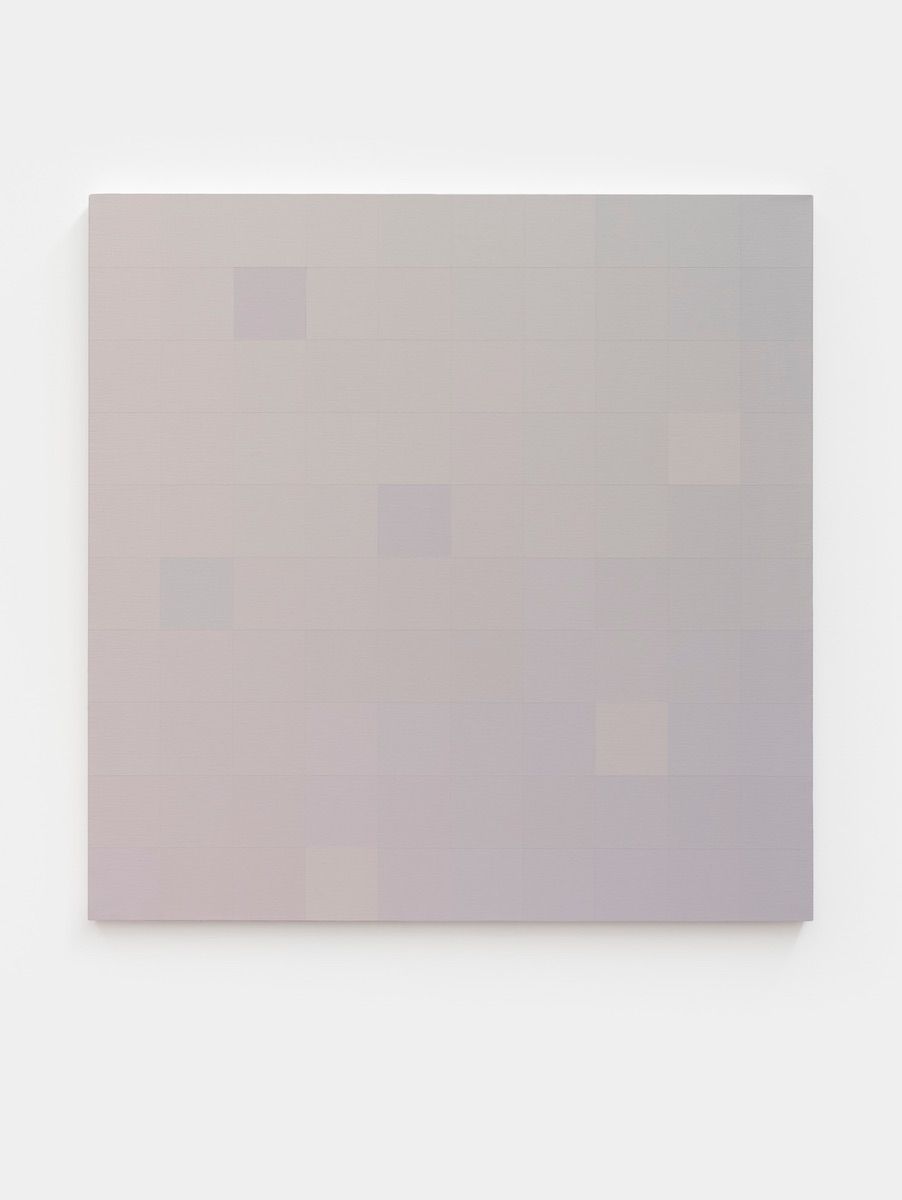
100 201907 - 2, 2019
acrylic on canvas
100 x 100 cm
SALES INQUIRY
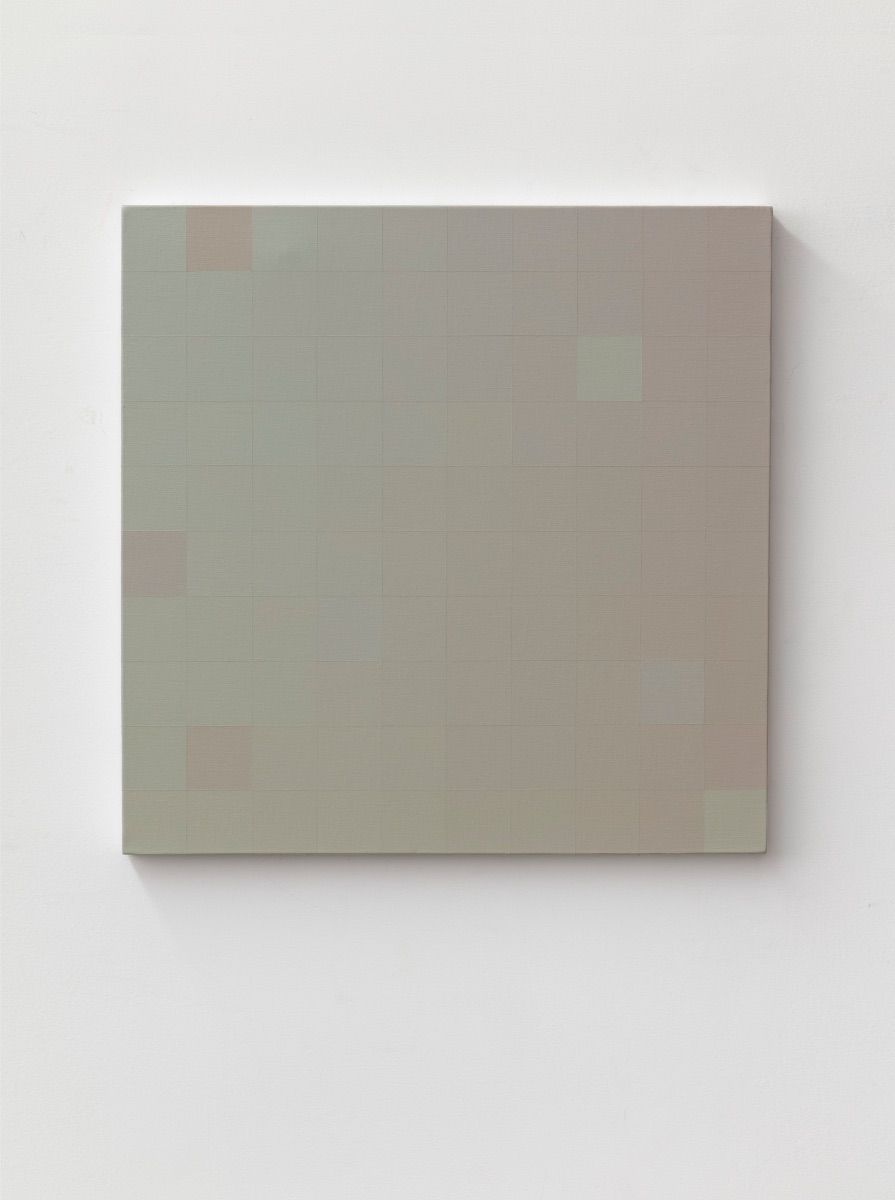
100 201909, 2019
acrylic on canvas
60 x 60 cm
SALES INQUIRY
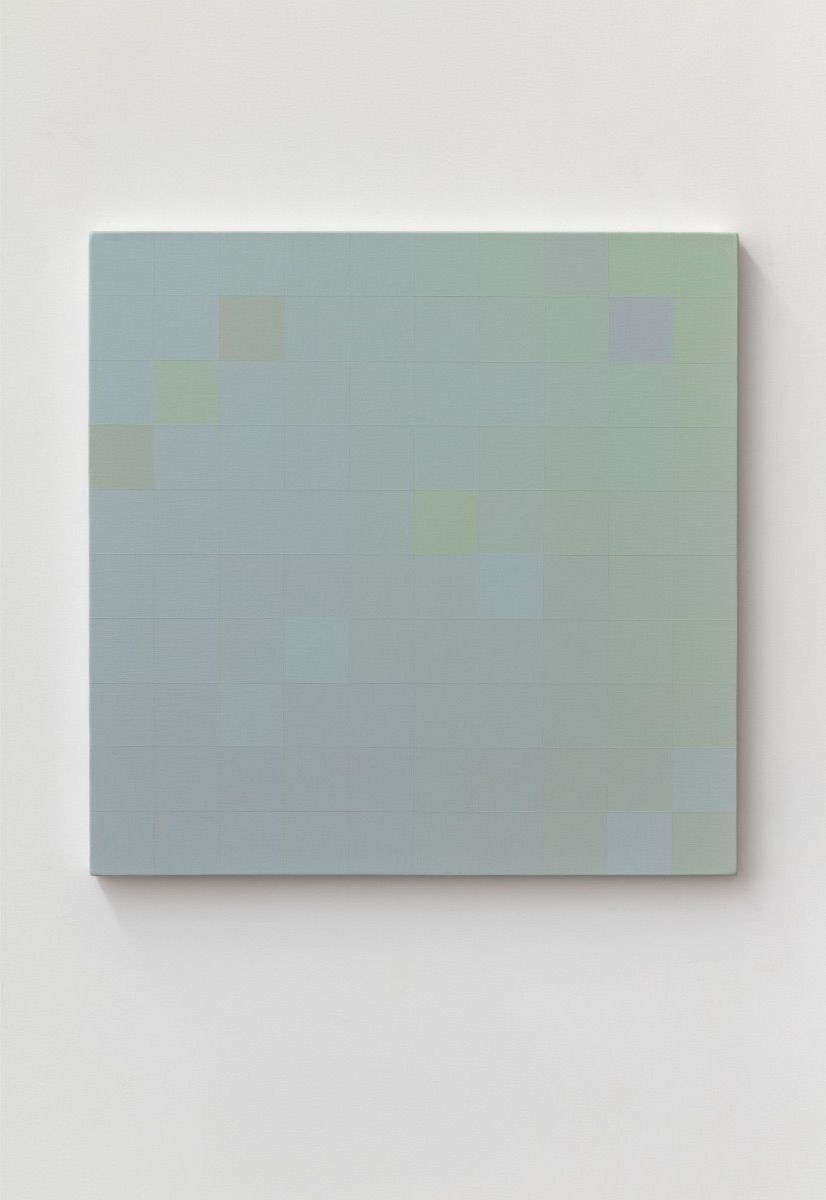
100 201908, 2019
acrylic on canvas
60 x 60 cm
SALES INQUIRY
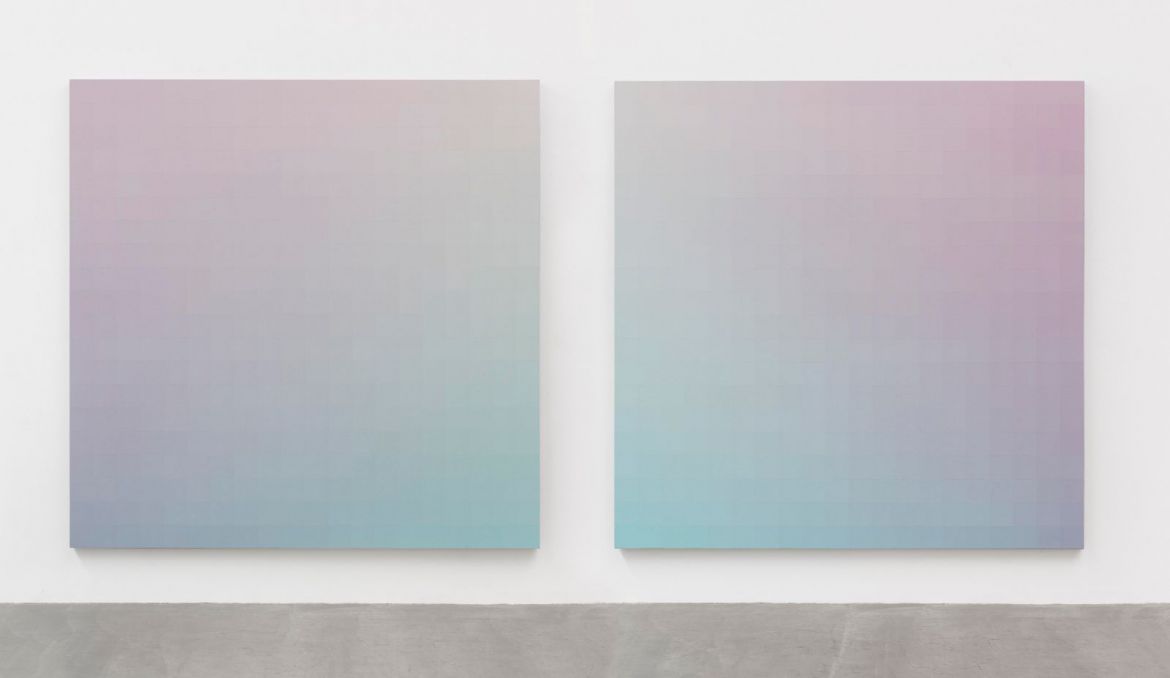
Left: 400 201805 - 1, 2018; Right: 400 201805 - 2, 2018
acrylic on canvas
240 x 240 cm
SALES INQUIRY
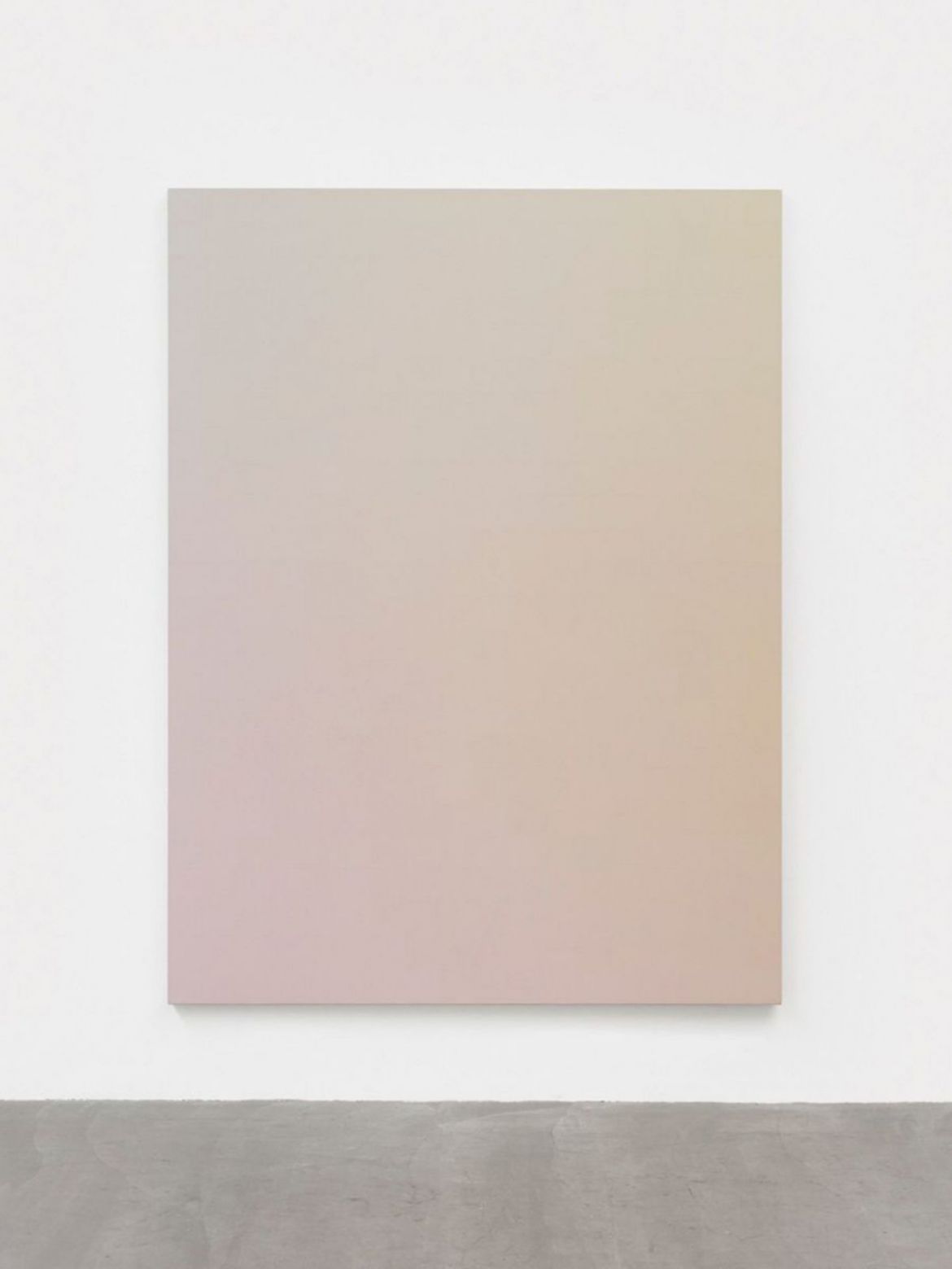
432 201903, 2019
acrylic on canvas
240 x 180 cm
SALES INQUIRY
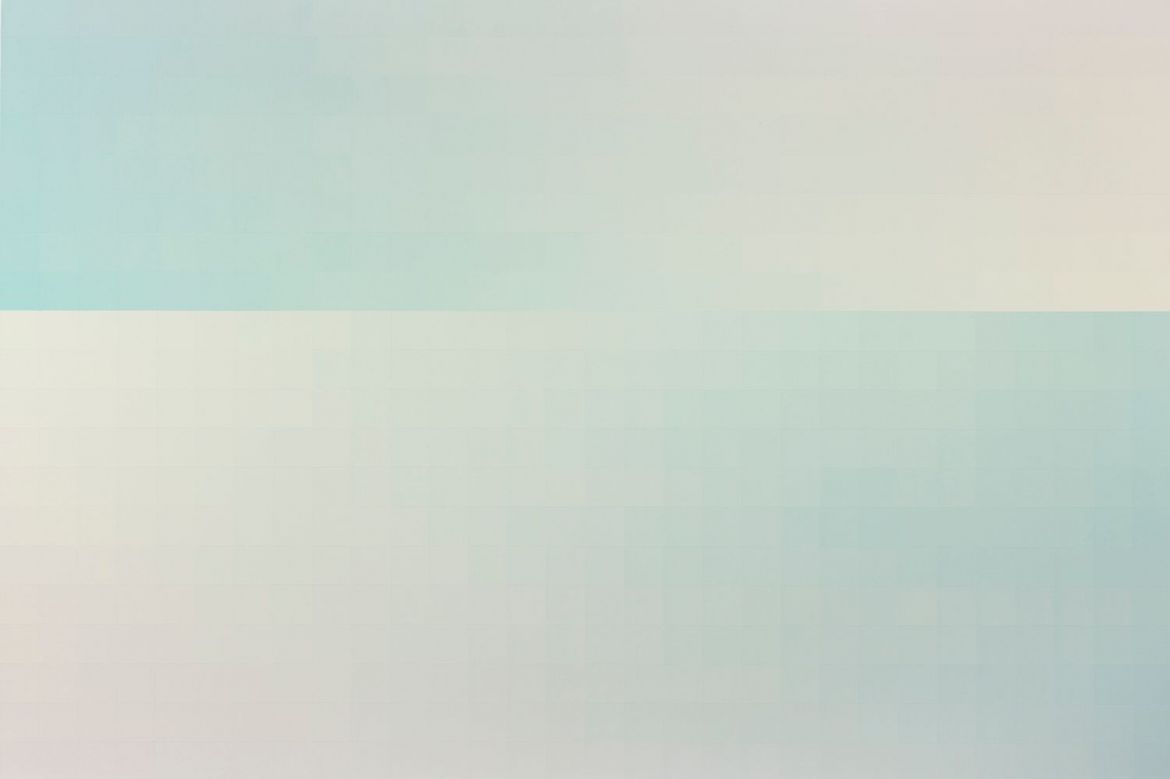
600 201809, 2018
acrylic on canvas
200 x 300 cm
SALES INQUIRY
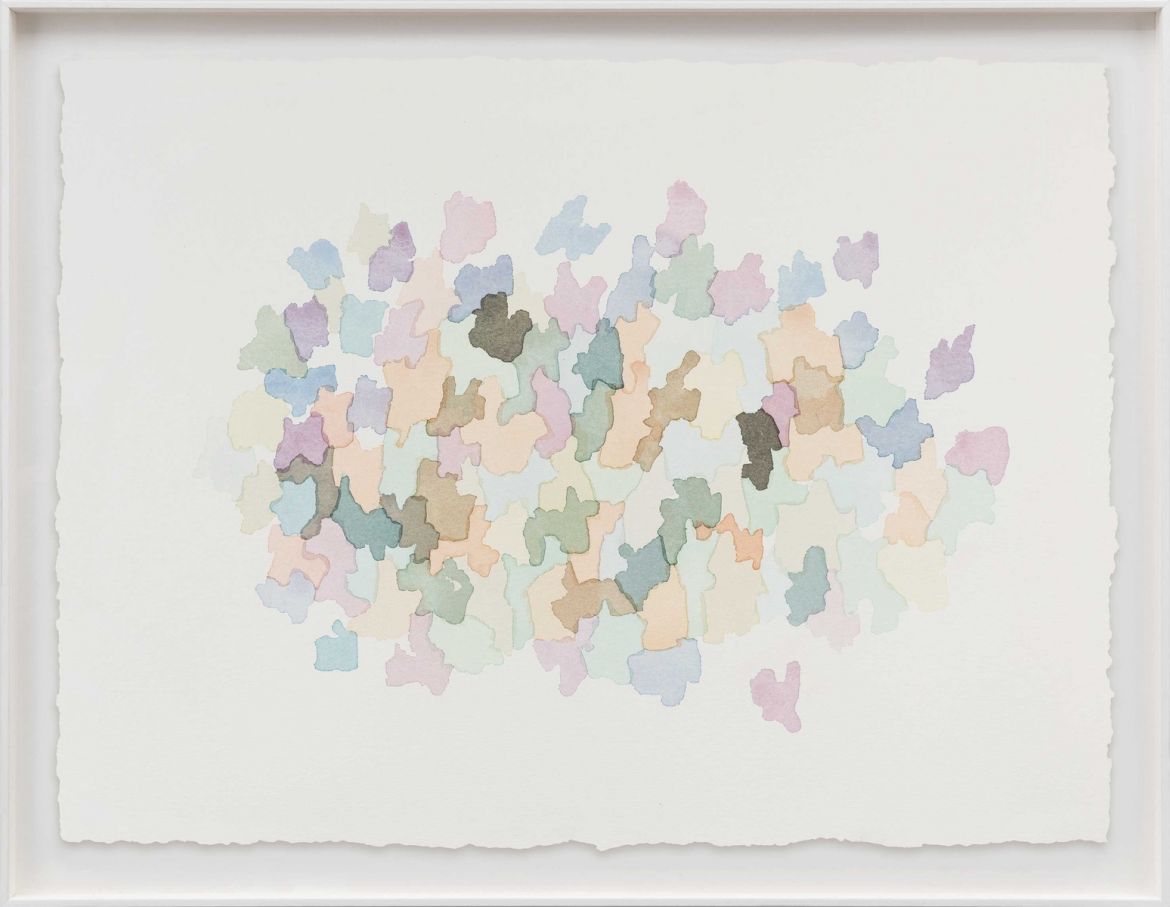
Scattered Moss No. 1, 2020
watercolor on paper
58 x 77 cm (drawing), 65.5 x 84.5 cm (frame)
SALES INQUIRY
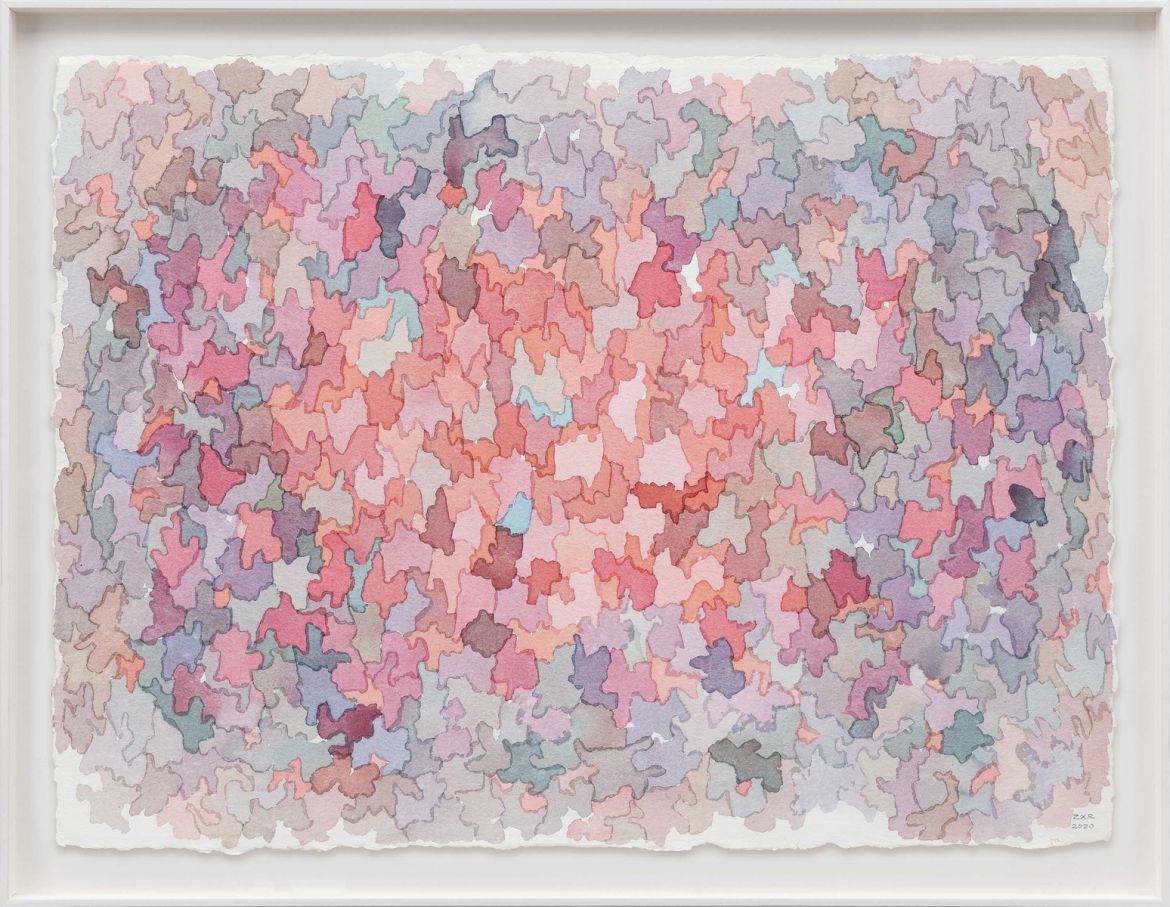
Scattered Moss No. 2, 2020
watercolor on paper
58 x 77 cm (drawing), 65.5 x 84.5 cm (frame)
SALES INQUIRY
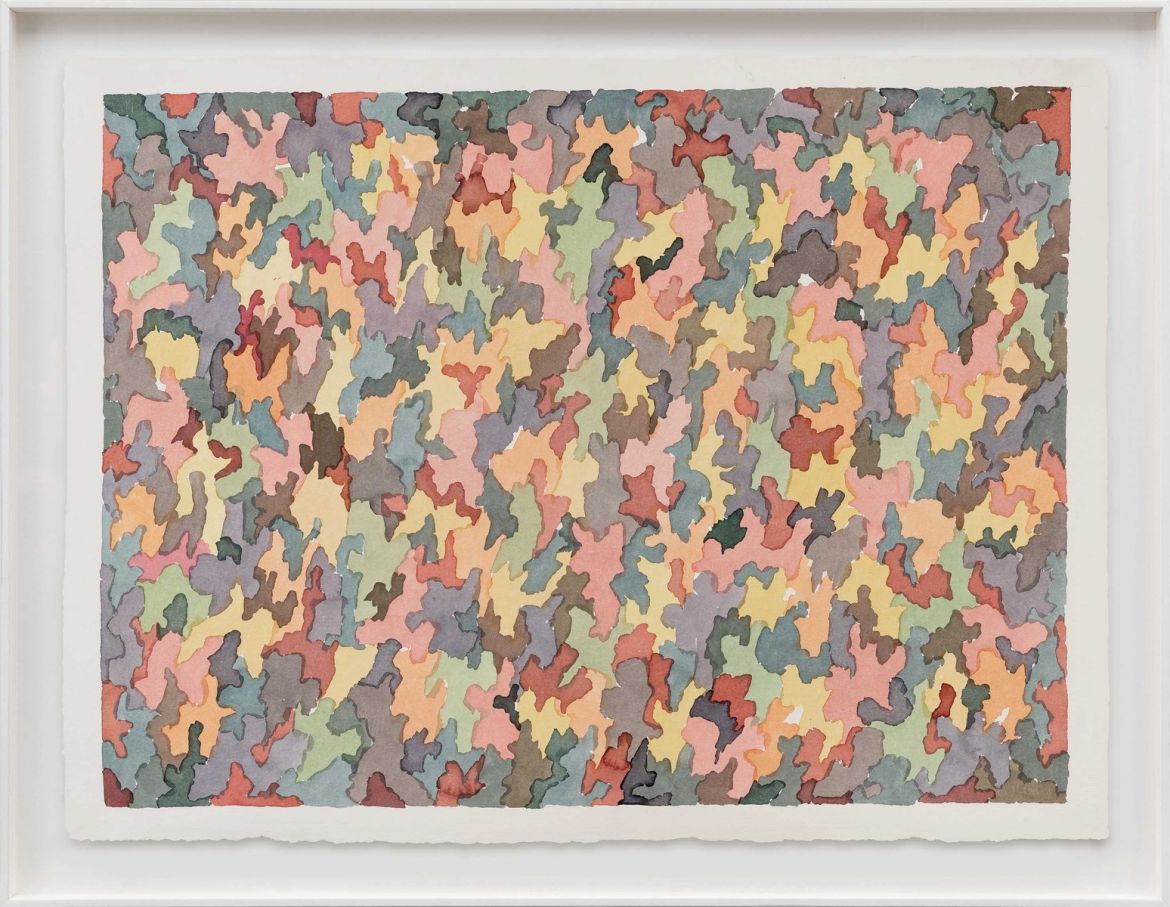
Scattered Moss No. 5, 2020
watercolor on paper
58 x 77 cm (drawing), 65.5 x 84.5 cm (frame)
SALES INQUIRY
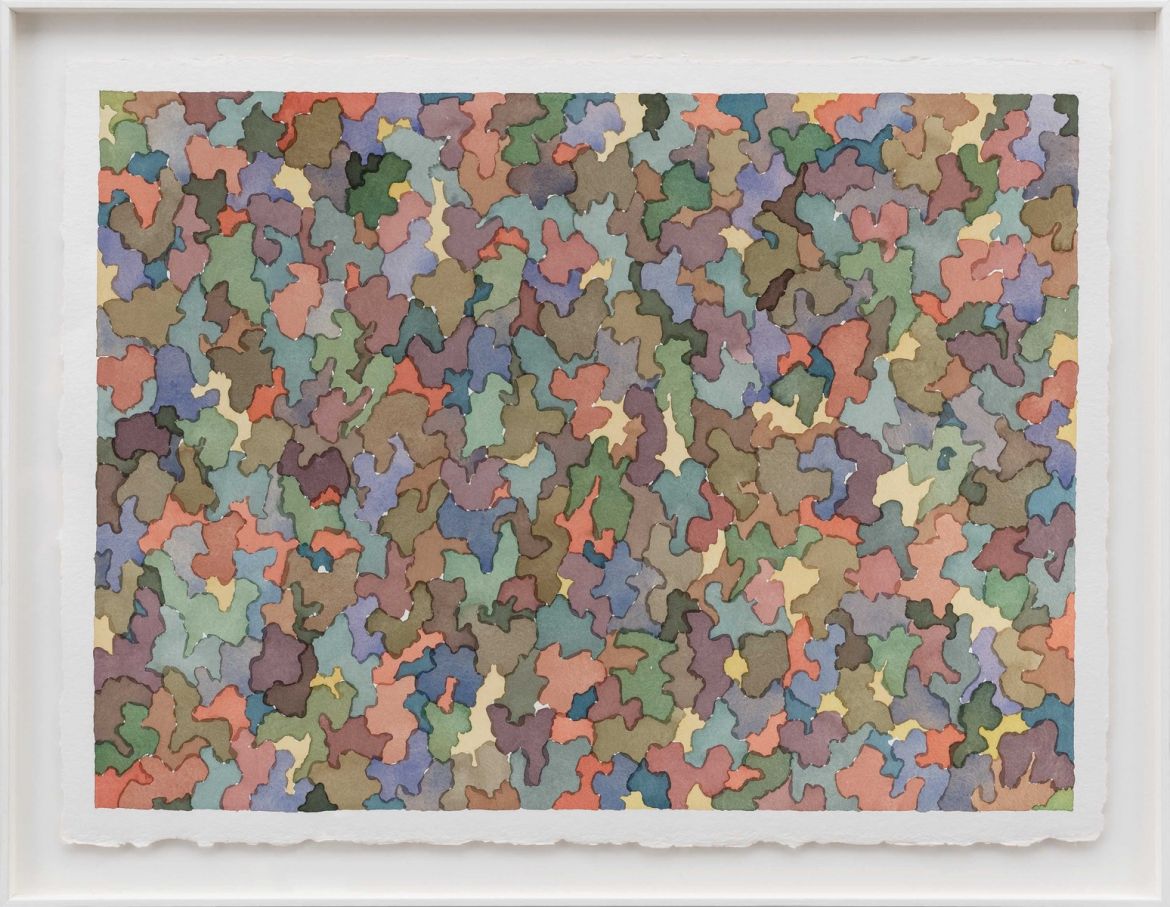
Scattered Moss No. 6, 2020
watercolor on paper
58 x 77 cm (drawing), 65.5 x 84.5 cm (frame)
SALES INQUIRY
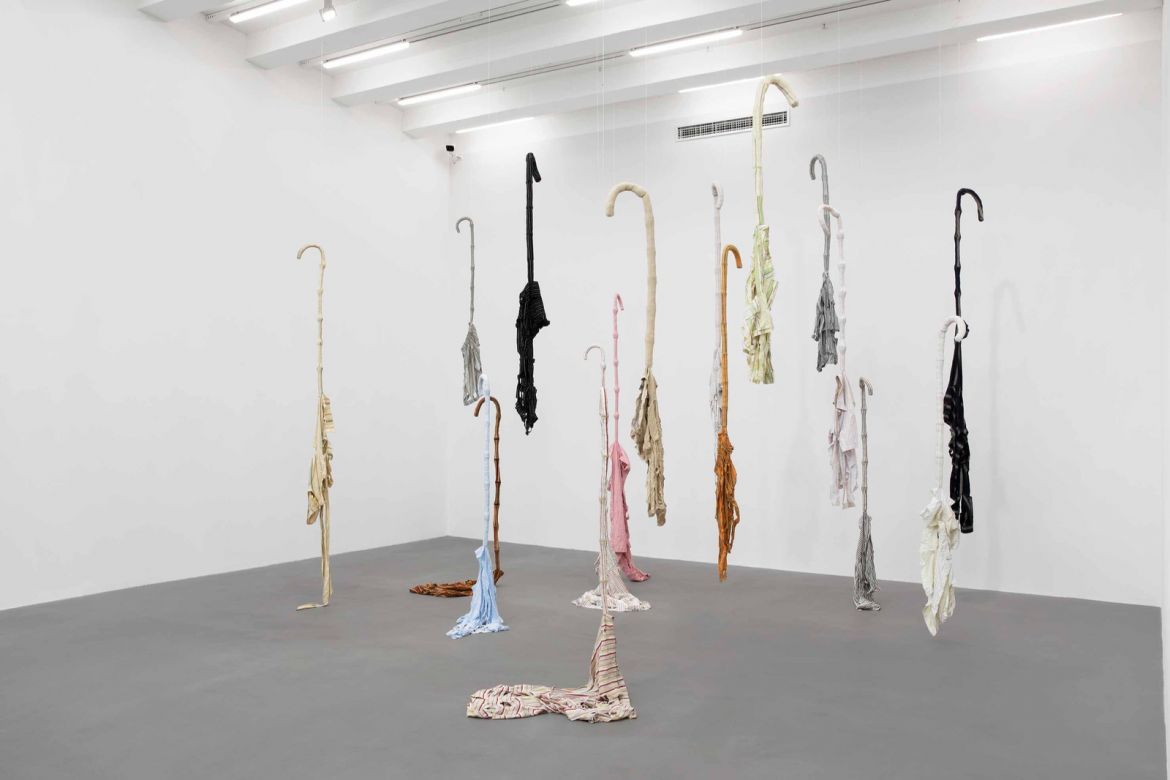
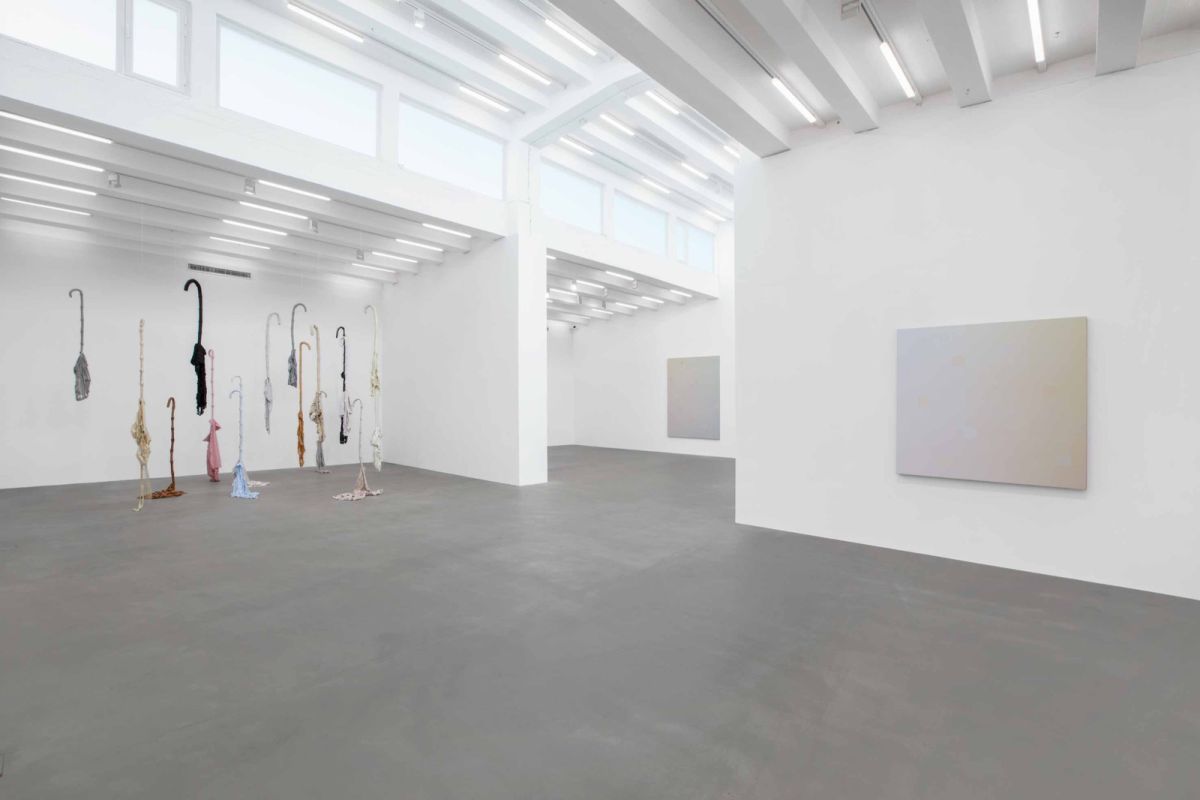
Bamboo Canes, 2016 - 2019
old clothes, cotton thread, cloth
17 pcs., heights vary from 170 cm to 210 cm
SALES INQUIRY
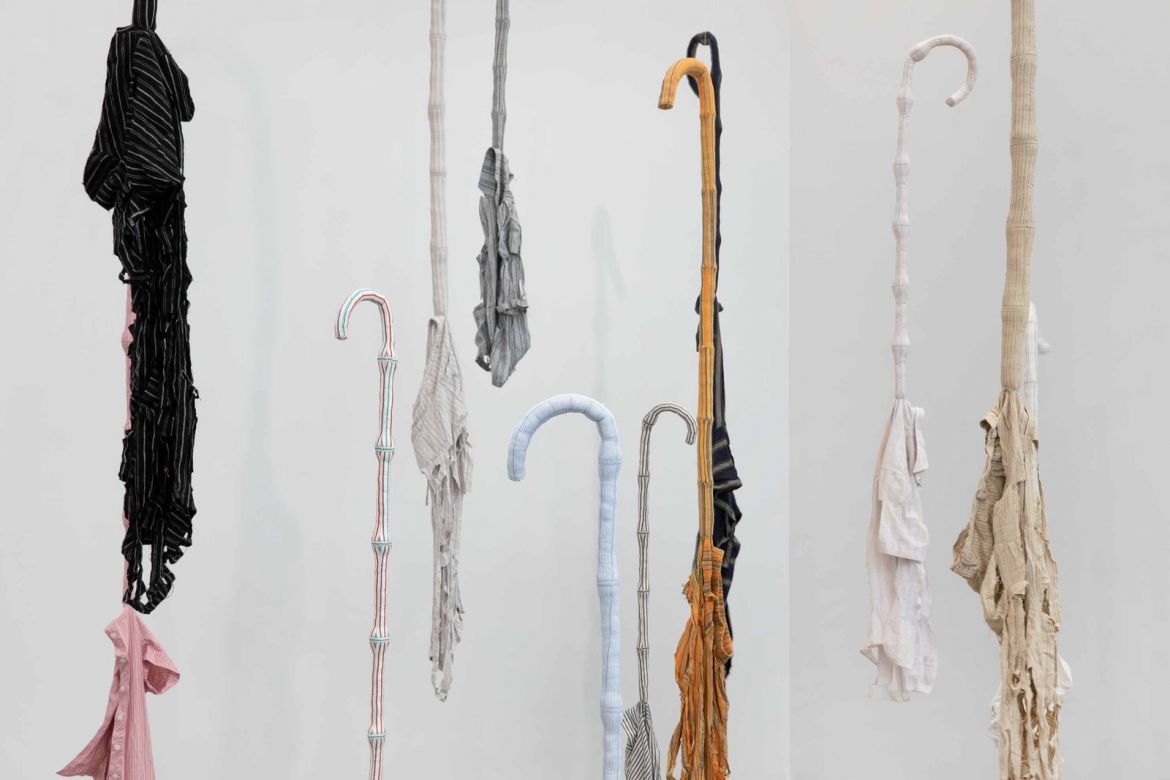
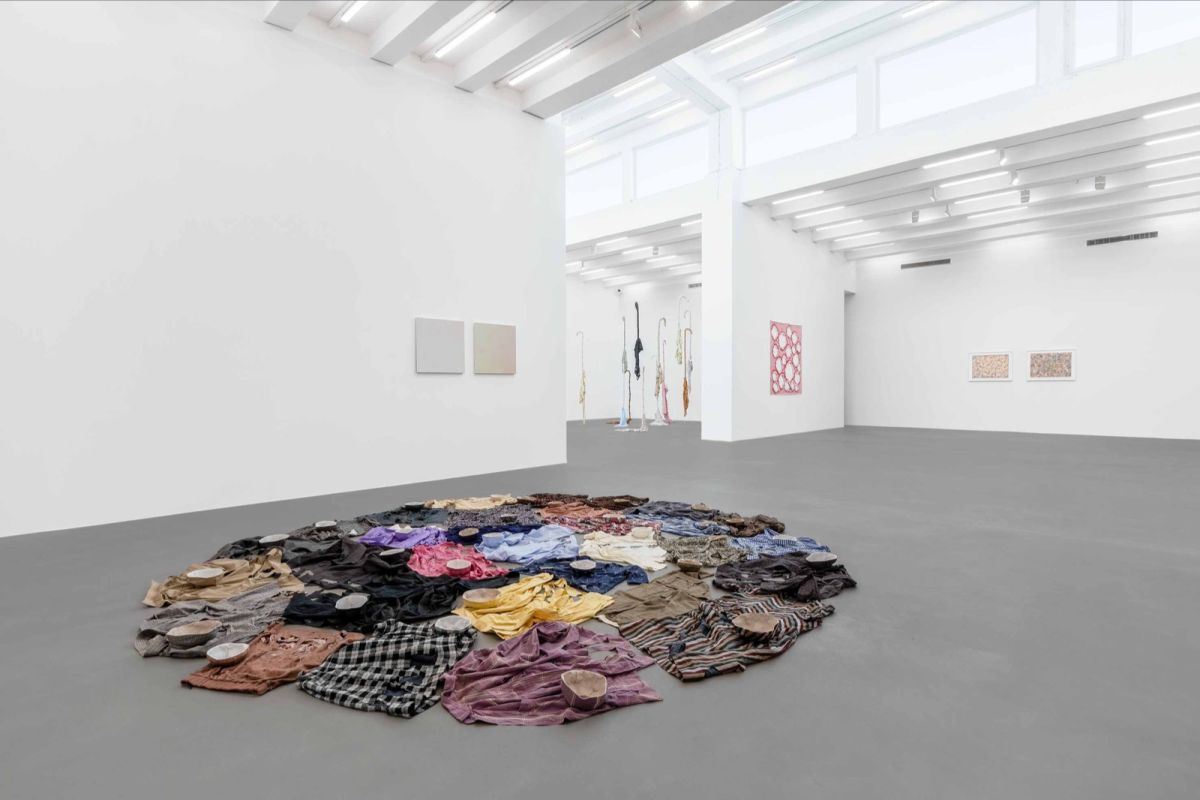
The artist cut pieces from old clothing with vertical stripes and sewed them together in the form of bamboo canes, which she then attached to the tops or bottoms of the original clothes, with multiple such objects arranged together to form the complete artwork. Stripes are a common element in clothing. They echo the contours of woven material, and they also respond to people’s psychological need for direction, order and repetition. The bamboo cane is an important token of her memories of the declining bodies of elders in her family from my childhood. She has replaced the “hardness” of bamboo with the “softness” of cloth. She filled the cloth canes with cotton balls to form the bamboo joints, which now resemble human limbs or organs. The linking of clothing and cane is a visual presentation of the contrast between old and new and the relationship between source and outflow. The varying heights of the suspended canes embody pity and reverence for aging and declining life.
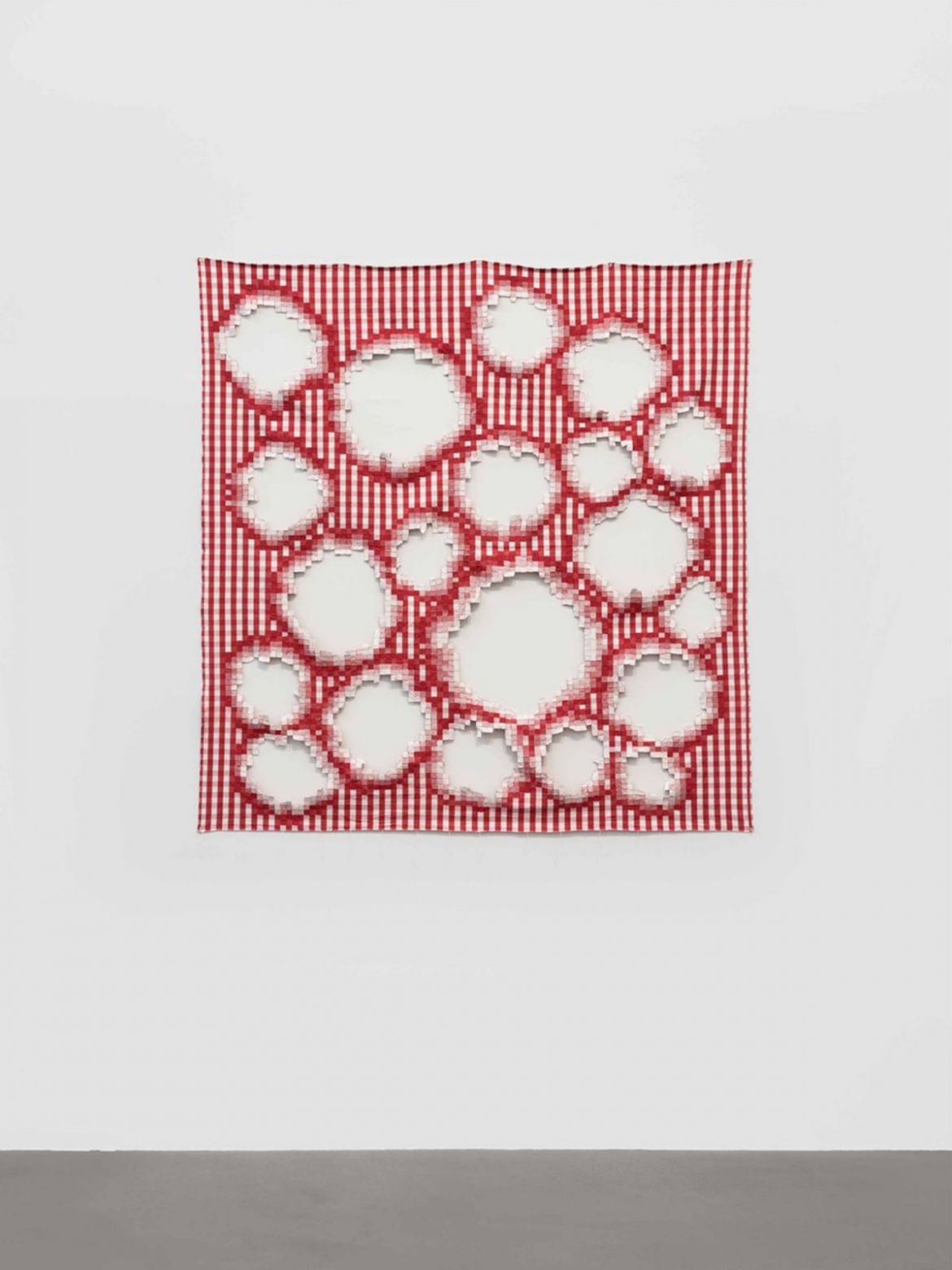
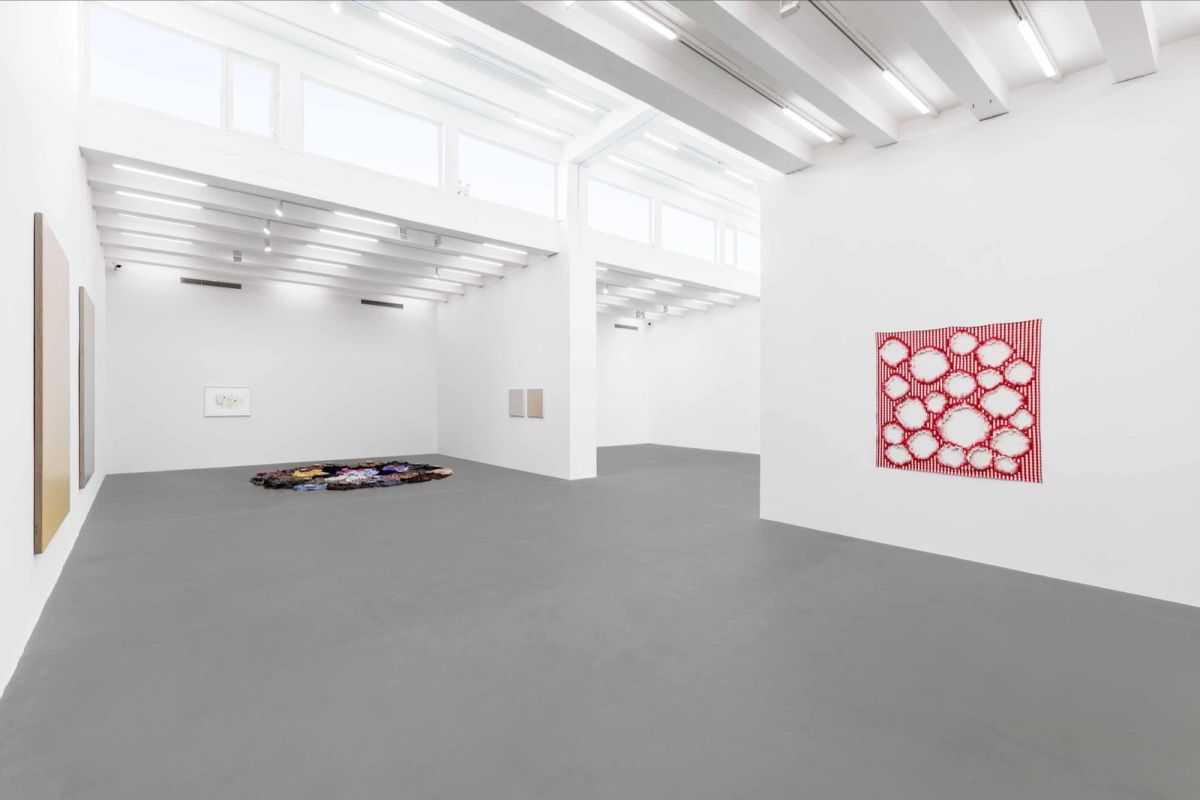
Red and White Checkered Cloth, 2019
Ikea red and white checkered cloth, cotton thread
approx. 150 x 150 cm
SALES INQUIRY
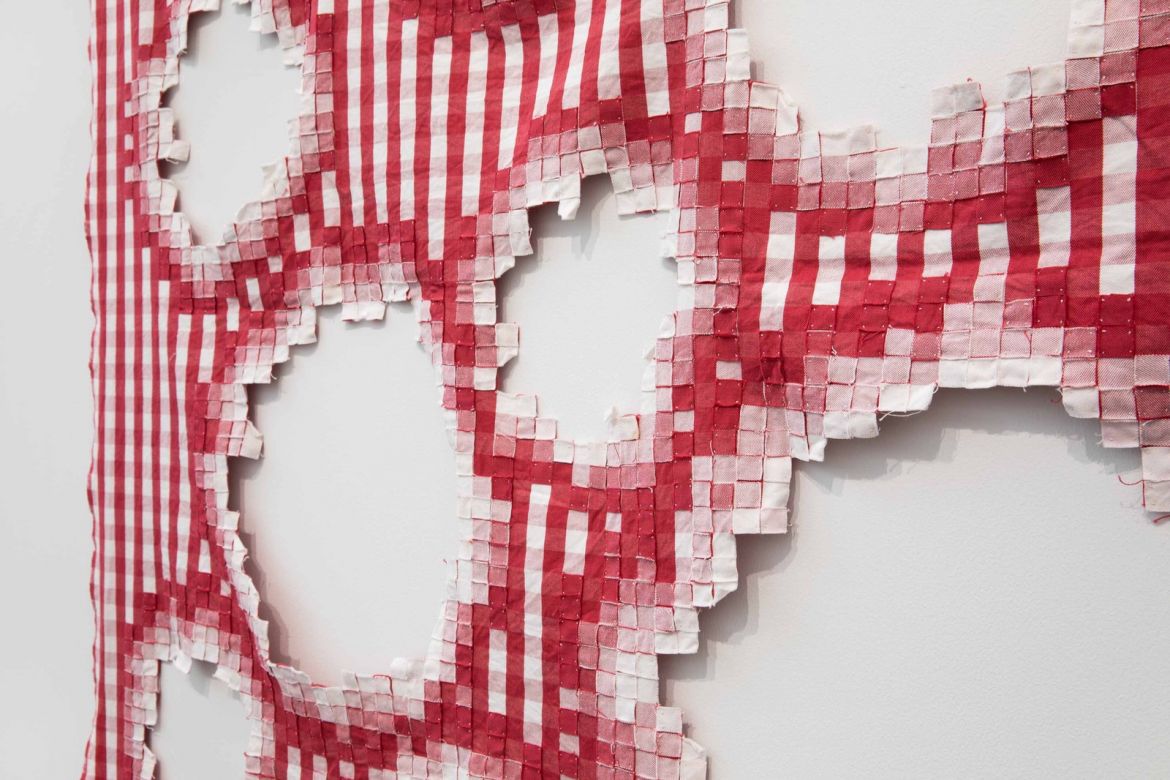
The artist chose a simple red and white checkered cloth from Ikea, and randomly marked out irregular circles of different sizes, which she then cut out following the checkered patterns along the edges. She then took the cloth she had cut from these holes, and stitched it back onto the original cloth, expanding the boundaries of the circles outwards. In the repetitive labor of cutting and sewing, she gets to enjoy the successive pleasures of deconstruction and creation. It echoes the “destruction” in her old clothing installations, and also has internal philosophical connections to the visual chaos state rooted in the temporal order of her abstract color gradient grid paintings.
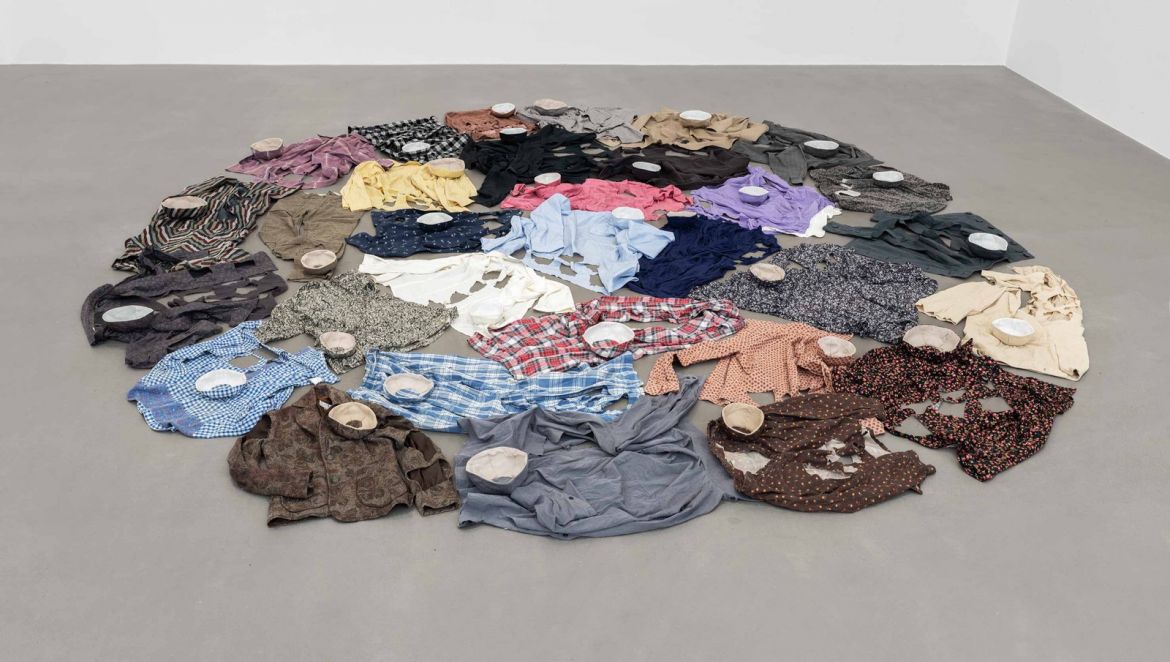
Alienated Substance, 2015 - 2018
old clothes, cotton thread, cloth
approx. 32 pcs., sizes vary from 60 x 60 cm to 80 x 80 cm
SALES INQUIRY
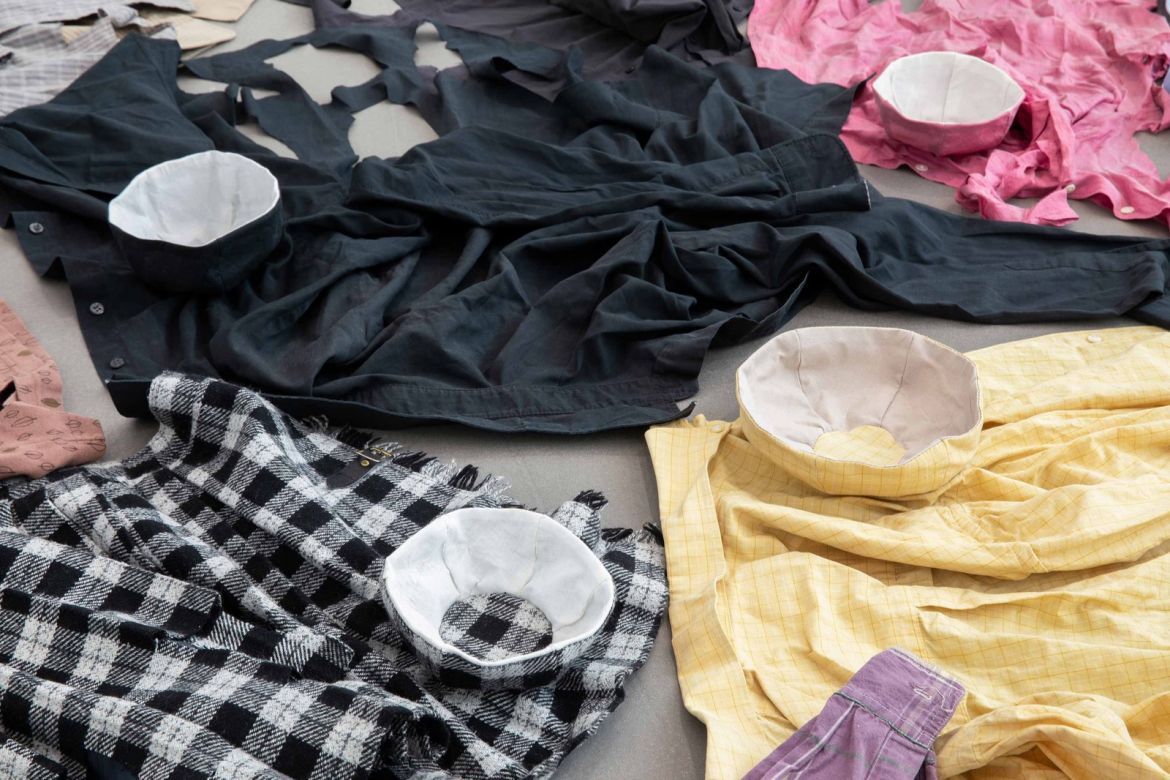
The work shows an overall link to the clothing. While she was collecting old clothes from her relatives and friends, she found that the relationship between man and clothes is just like the relationship between man and rice bowls. Rice bowls metaphor a guarantee of survival or work in Chinese society, and they are also a necessity for everyday life. Therefore, she cuts some parts out of the selected clothes, and sews them into rice bowls shape installation, which are fixed on the clothes. This rice bowl seems like an object growing out of the clothes. Each rice bowl is like an infant with its umbilical cord uncut and attached to its mother—the clothes—with this umbilical cord. In this way, the sense of sculpture and installation of the works is highlighted and an organic whole of form and language is formed. (by Huang Du)
DOWNLOADS
PDF portfolio of River with Three Buoys, Zhang Xuerui
PDF portfolio of Everyday as Ontology, Zhang Xuerui
ARTIST INFORMATION
View more information of the artist, please click here.