
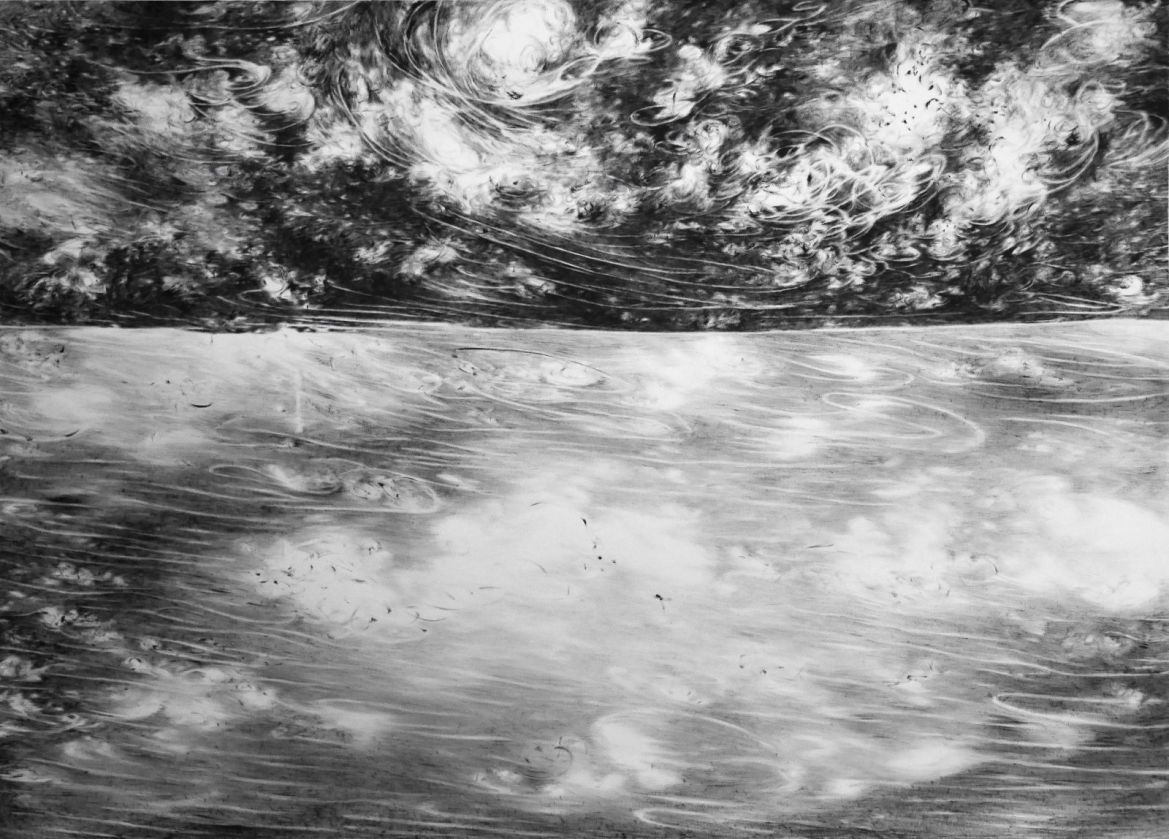
dark sky, 2020
gouache on paper
240 x 328 cm

A recurrent interest in Julia Steiner's (*1982, lives and works in Basel, Switzerland) artistic exploration lies in space itself, its dynamics, and forces that affect the viewer’s perception. Steiner mostly works with gouache on paper and connects sheets of paper into very large works, whose strong suggestive power derives from the complicated layering of paint in organic and geometric forms. In correlation with space itself, the artwork displays an enormous depth and rhythm. As a painting technique, gouache makes it possible to differentiate the spectrum of darks and lights, while some areas are intentionally left bare and white. It's this interplay of color, shades, and gaps that compose a patterned balance among forms. In this new series "systems", Steiner explores permeable net-like structures in their polarity, mobility, and fragility, including the happenings in-between. A system is composed of an agglomeration of individual parts. The composition represents the early phase, visually holding a central point of gravity into which different components are attracted to grow into a whole.
A common denominator in Steiner's practice is the composition of heterotopic dimensions that allow for the permeability and interaction between dualities such as light-dark, inside-outside, drawn-undrawn, kinetic-immobile. A continuous element in the cycle "system" is a net-like structure. Recessed white lines condense into a vibrating grid. They shift, detach and break, and reconnect. It seems as if a rhythm streams into a musical mesh, expanding in space. A surprising ambiguity occurs though because each work appears equally bound and removed from the momentum. In this new series, Steiner reflects the fragility of systems and the principle of causality. Also, each system is subject to spatial, temporal, and resource limits, and underlies physical forces that cause friction. Steiner's artwork can raise the question of anthropogenic influence on the environment, and how everything is inevitably subject to cause and effect.
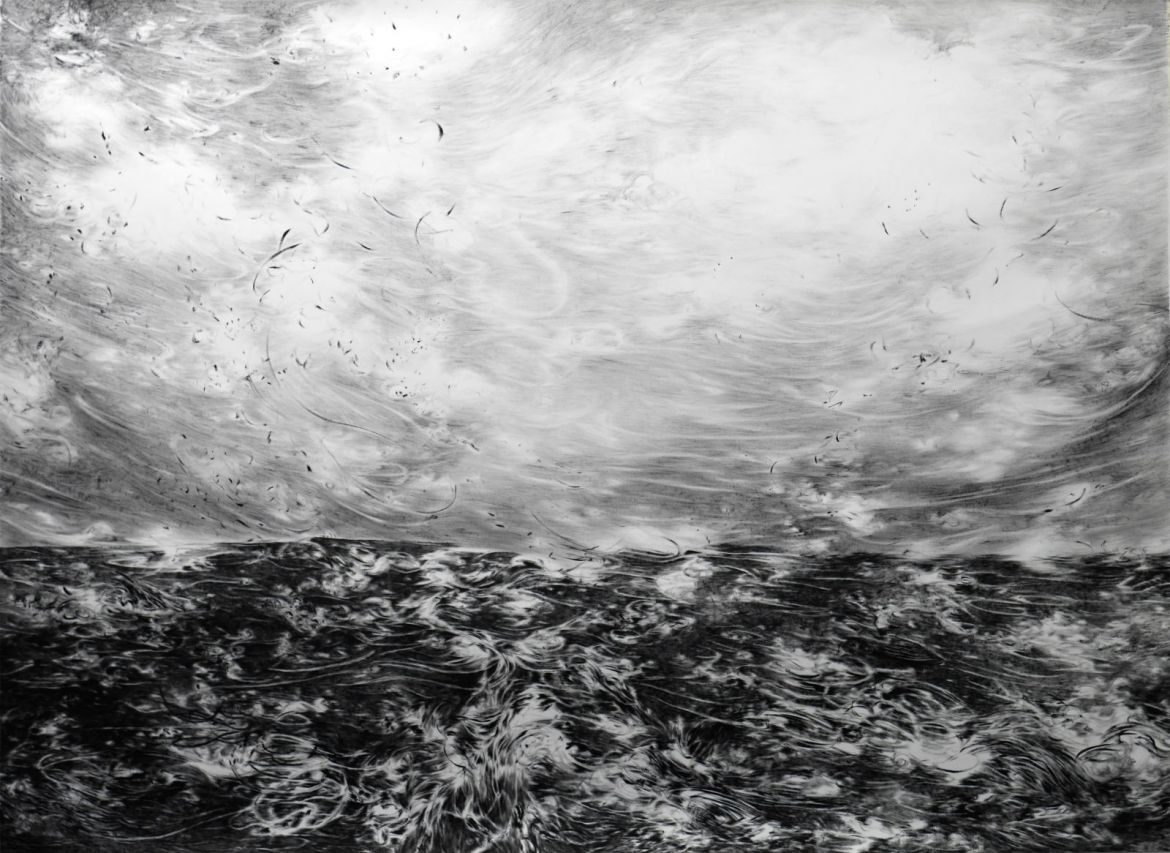
dark ground, 2020
gouache on paper
240 x 326 cm
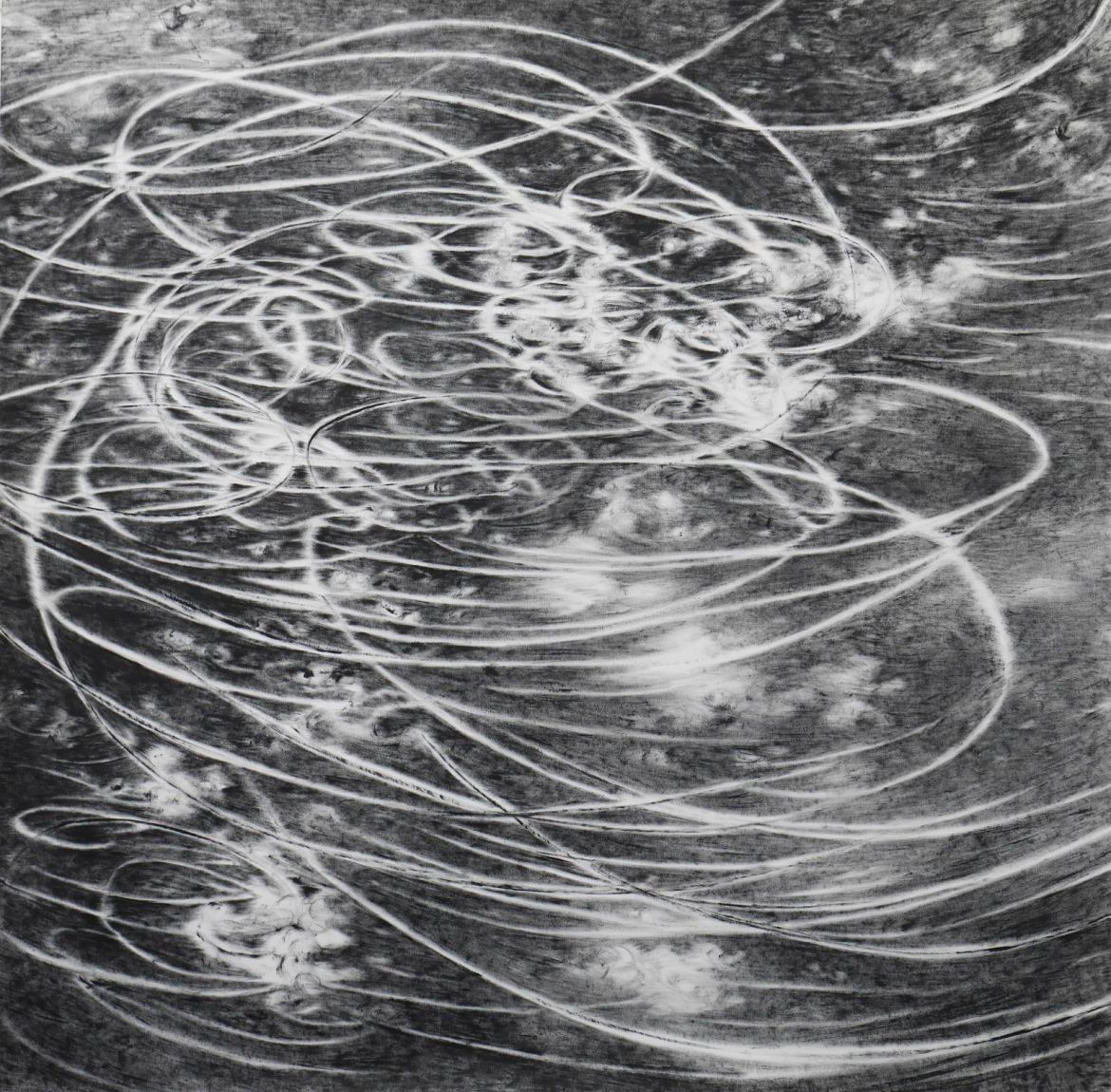
circular flight III, 2020
gouache on paper
138 x 140 cm
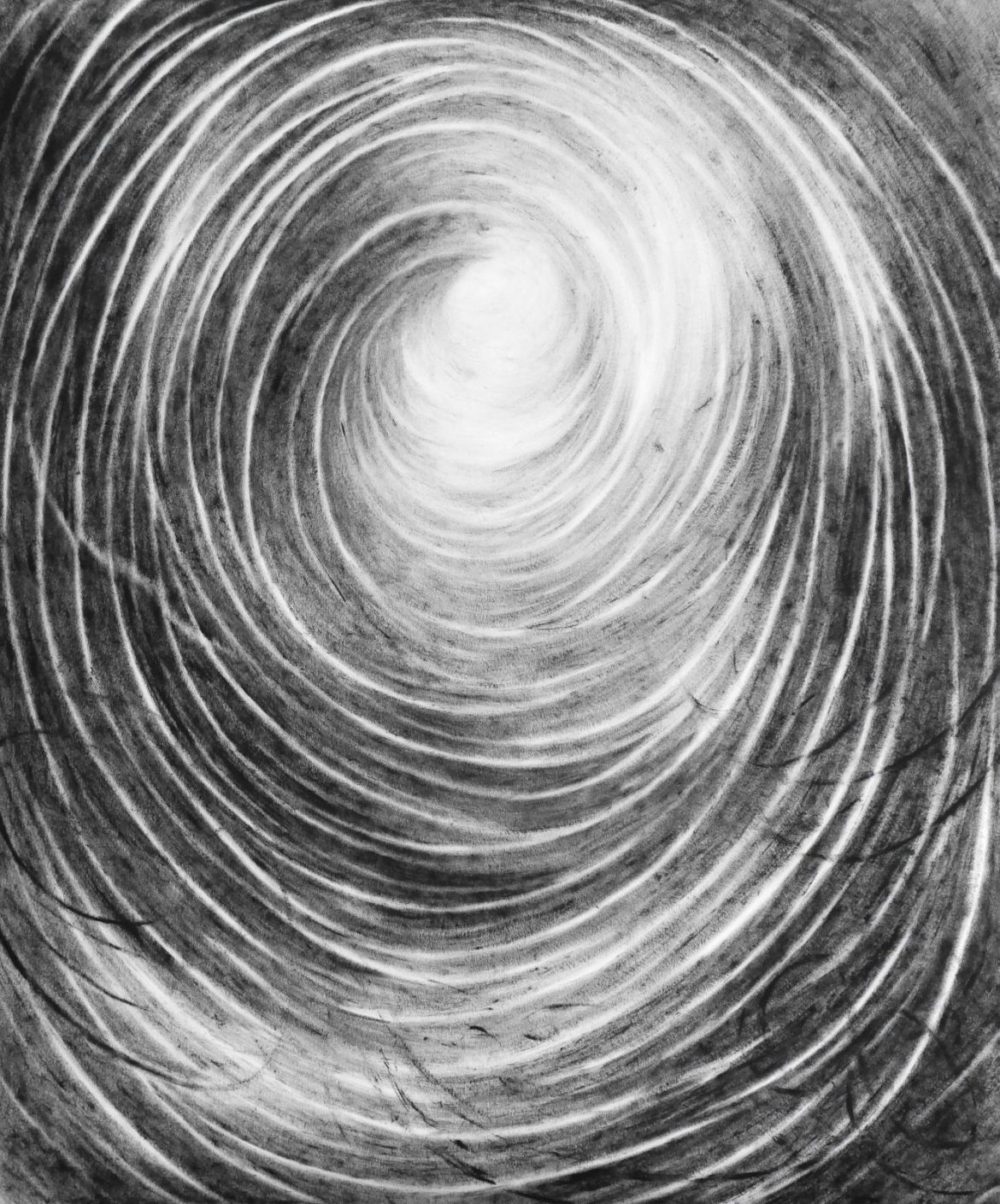
circulation I, 2020
gouache on paper
90 x 70 cm
Julia Steiner
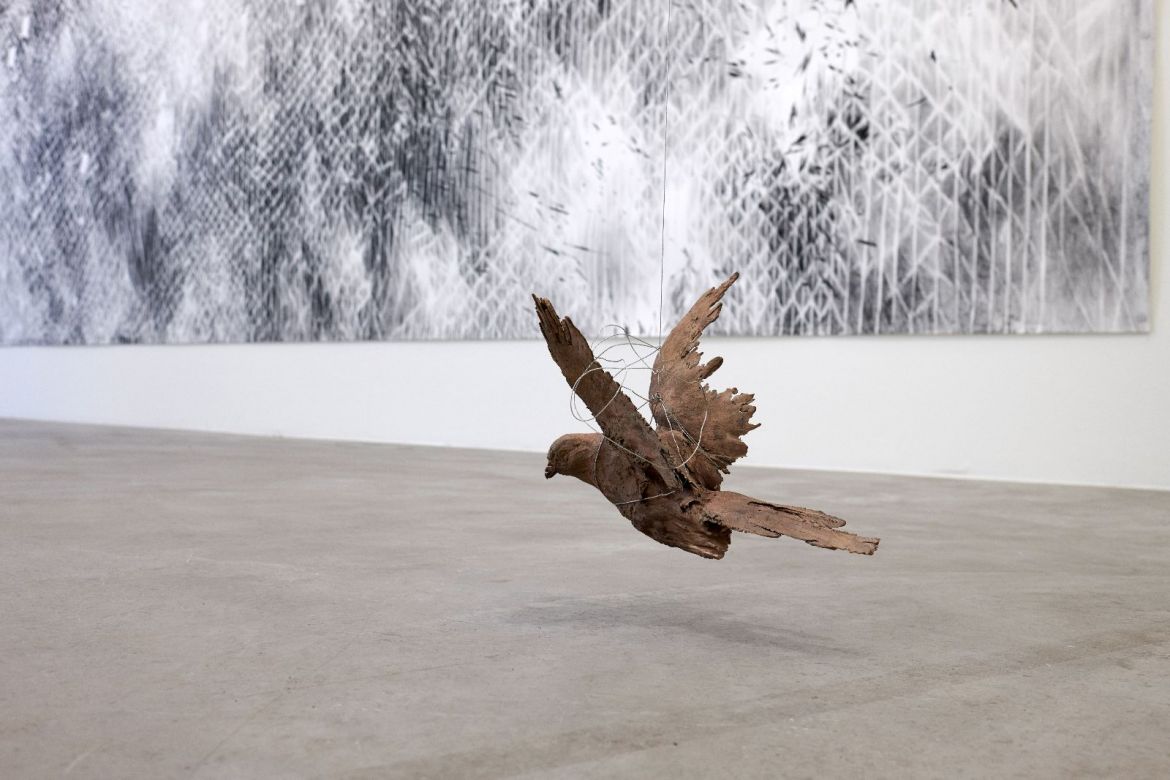
flight (weight) I, 2016 - 2019
bronze, wire cable
34 x 28 x 20